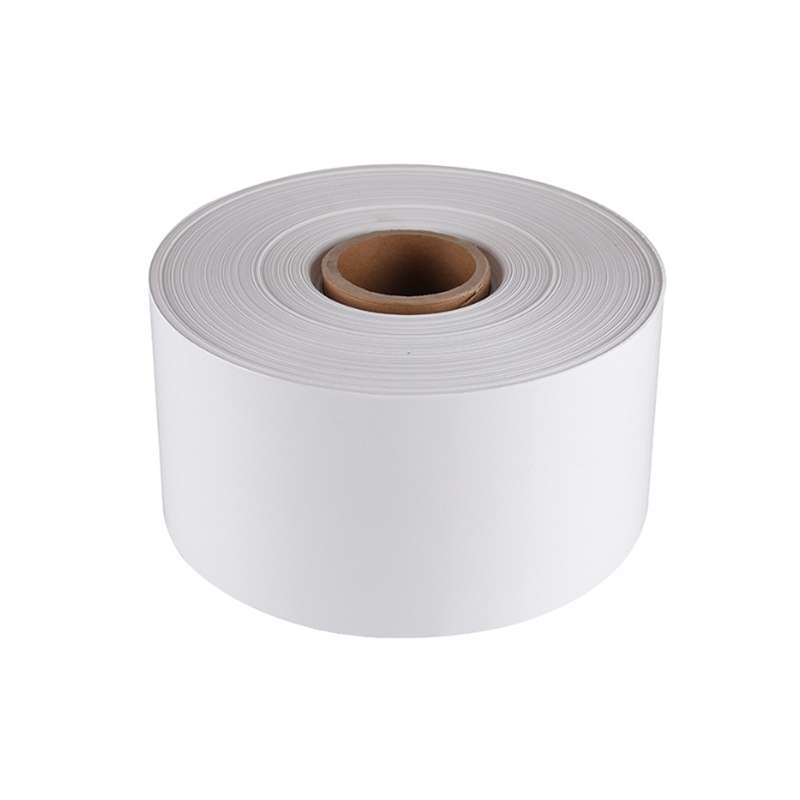
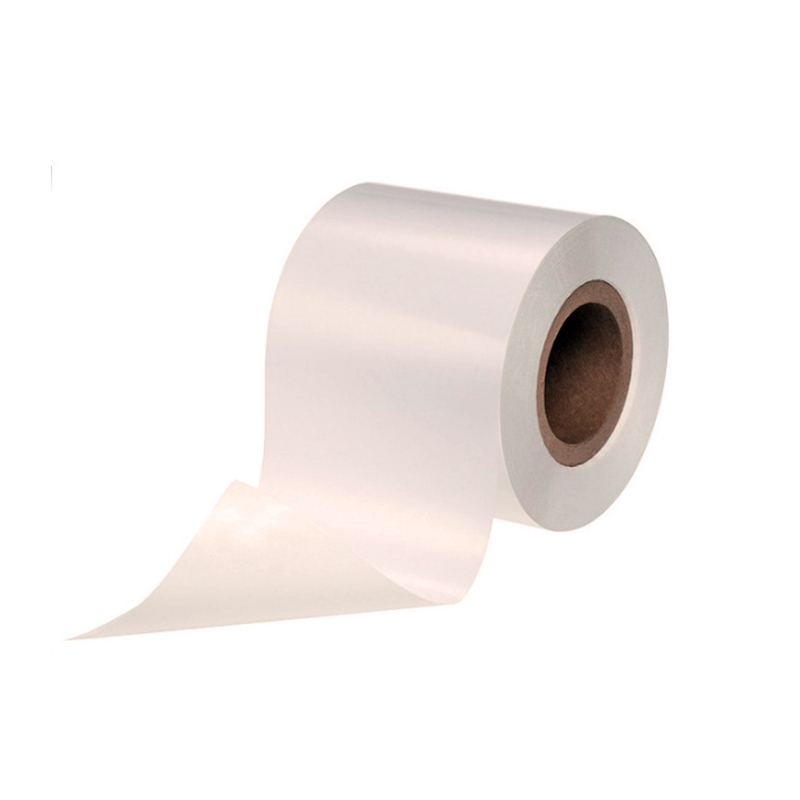
Cable label material refers to the specific type of material used to create labels for identifying and organizing cables. These materials are designed to withstand various environmental conditions, ensuring that the labels remain legible and adhere securely over time. The choice of cable label material depends on factors such as the environment where the cables are used, the type of cables, and specific labeling requirements.


Introduction Cotton is harvested, ginned, pressed into bales, and often stored in open yards for wee...
View MoreCustom Die-Cut Label Materials and Finished Printed Labels from Zhejiang Guanma: One-Stop Partner fo...
View MoreA Buyer's Guide to Sourcing Custom Die-Cut Self-Adhesive Labels: Matching Materials, Printing Method...
View MoreCustom Printed Self-Adhesive Labels in China: Material, Adhesive, and Printing Controlled Under One ...
View MoreFrom Self-Adhesive Label Raw Material to Custom Printed Finished Labels: Why Guanma Is Your One-Stop...
View MoreZhejiang Guanma Packaging Co., Ltd. is a self-adhesive paper and film manufacturer based in Jiaxing, China, close to Shanghai. As a Cable Label Material manufacturer, we supply coated and laminated label stock — face film, adhesive and release liner built as one construction — in jumbo rolls, custom slit rolls, blank die-cut labels and custom printed finished labels.
The range addresses wire and cable identification, data and network cable marking, power and communication cable labels, and optical fibre labelling, where a printed legend has to stay readable and stay attached for the service life of the installation. Material selection starts with the cable jacket, the marking method and the environment the harness will see, not with the label alone.
| Construction | Code | Where It Fits |
|---|---|---|
| 75 µm matt white synthetic PP (Yupo-type) / solvent adhesive / 60 g white glassine liner | F7MU30 | Matt, low-glare face for printed wire and cable identification; conforms to curved jackets and bundle wrap; network, data, power and communication cable marking. |
| 25 µm bright white PET / acrylic solvent adhesive / 80 g white glassine liner | TY2MB60 | Thin, high-tensile film for wrap and flag labels on small-diameter cables, tight bend radii and dense panel layouts; resists chemicals and elevated service temperatures. |
| Liner options | — | 50/60/80 g glassine on the PP construction; 60/80/120/140 g glassine or release paper on the PET construction. Liner grade is matched to die-cutting depth, roll stiffness and applicator feed. |
| Roll format | — | Jumbo rolls at 1020/1080/1530 mm on the PP construction and 1070/1080 mm on PET, with custom slit widths to order for hand application, desktop printers and automatic labelers. |
| Adhesive families | — | Solvent, water-based acrylic, removable, rubber and UV-curable systems, selected against jacket polymer, service temperature and whether the label must be repositioned during assembly. |
| Printing | — | Flexographic, screen, UV, offset, digital/inkjet and laser printing; supplied as blank die-cut unprinted labels or as custom printed finished labels. |
Both cable constructions are filmic rather than paper: they do not fibre-tear on removal, they tolerate moisture and handling oils, and they hold print at the small character heights used for wire marking.
Where a cable runs outdoors, through wash-down areas or across a plant roof, the face film and adhesive are reviewed together with a UV-stable construction. Our outdoor application label material range covers UV-resistant PVC and PE films with high-tack permanent adhesive for those runs.
Plasticised PVC jackets are the most common cause of cable label failure. Plasticiser migrates out of the jacket over time and softens rubber-based adhesives, so a solvent acrylic system is normally the safer pairing on flexible PVC. PE, PUR and LSZH jackets sit at the other end of the surface-energy scale and need an adhesive that wets out quickly and builds tack before the label is wrapped and pressed.
Our printing and converting lines support flexographic, screen, UV, offset and digital/inkjet production, so the same base stock can be delivered as unprinted die-cut labels for a customer's own printer or as finished printed labels with the legend, barcode and logo already in place. Slitting and die cutting are carried out in-house, which keeps roll width, die repeat and print registration under one production schedule.
Print method determines the face stock finish. Thermal transfer and laser marking need a smooth, dense white surface; inkjet systems need a coated face that fixes the ink without feathering at 2–3 mm character heights; UV flexo needs a film that will not strike through. Our inkjet print label material range carries coated PP and PET faces developed for these digital workflows.
Every production run passes three control points: incoming material selection, pre-production machine testing, and finished goods inspection, with a testing machine check-in at the end of the line. Our quality management system is certified to ISO 9001, and certification documentation is provided with contract packages where the project requires it.
A quotation that holds up in production is built from application data rather than a face stock name alone. The list below is what we work through with cable assemblers, harness shops and label converters before releasing a specification.
Slit rolls are wound to the specified direction and packed to protect the edge and liner during transit, with roll and lot identification on each carton so material can be traced back to its production record. Printed orders ship with approved artwork reference and retained samples; unprinted stock ships against the approved construction specification. Delivery schedules are confirmed at order stage against the agreed slit programme and print workload.
Because we produce both the base stock and the finished label, a change in jacket material or print method can be handled inside one supply chain — the face film, adhesive and liner are re-matched without moving the job between suppliers.
For cables under roughly 6 mm, the 25 µm bright white PET construction is usually the better fit: the thin caliper wraps tightly without a visible ridge, and the film's tensile strength keeps a flag label upright. The 75 µm matt white synthetic PP is preferred where a larger printed area, a matt finish or a more conformable wrap around a bundle is needed.
We specify a solvent acrylic adhesive rather than rubber on plasticised PVC and confirm the wrap geometry so the label overlaps itself rather than terminating on the jacket. Jacket surface, application temperature and the time between labelling and bundling are all part of the specification review.
Yes. We supply blank die-cut unprinted labels on glassine liners in slit rolls suited to desktop thermal transfer and laser printers, as well as custom printed finished labels produced on our flexographic, screen, UV, offset and digital equipment.
Removable adhesive is available on both the synthetic PP and PET constructions. It suits test harnesses, temporary routing, rental equipment and any assembly step where the label is applied, checked and then repositioned before final dispatch.
We prepare a sample on the specified construction for application trials on your actual cable jacket, together with the construction specification covering face film, adhesive, liner, roll format and print method. Where a project requires quality documentation, our ISO 9001 certification and lot records are supplied with the contract package.
Our portfolio also includes Applications for applications with different operating ranges, interfaces or integration requirements.
Address : Building 2. No.111 Xincheng Road, Xitangqiao Street, Haiyan, Jiaxing, Zhejiang Province, China
Phone: +86-150 0573 0249
Tel: + 86-0573-8685 2732
Fax: + 86-0573-8685 2732
E-mail: [email protected]
Copyright© Zhejiang Guanma Packaging Co., Ltd.
 Privacy
Cable Label Material Manufacturers Wholesale Cable Labels Suppliers Cable Labels Factory


 English
 русский
 Español
 عربى