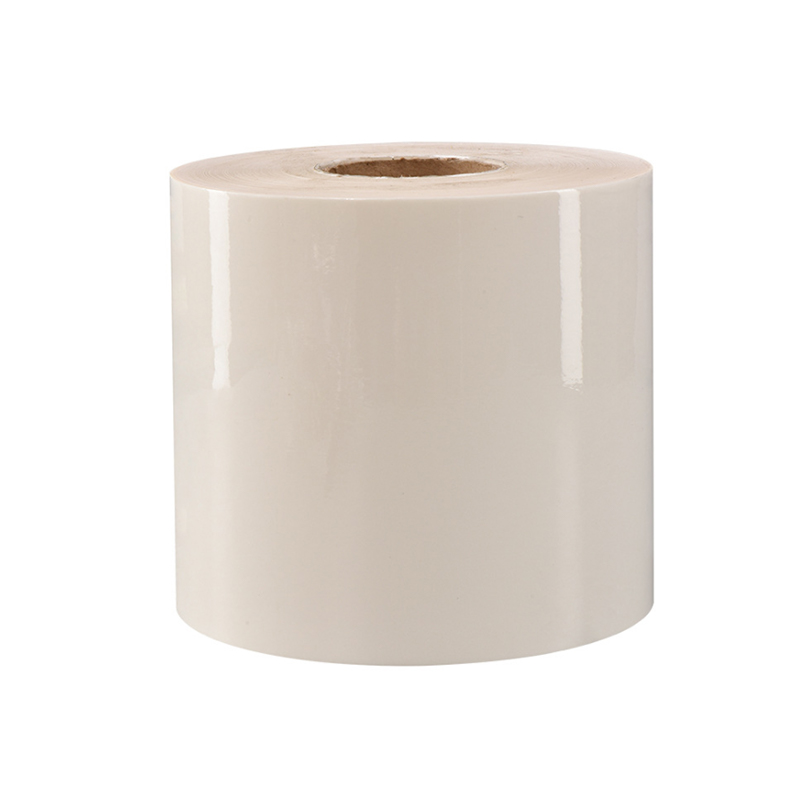
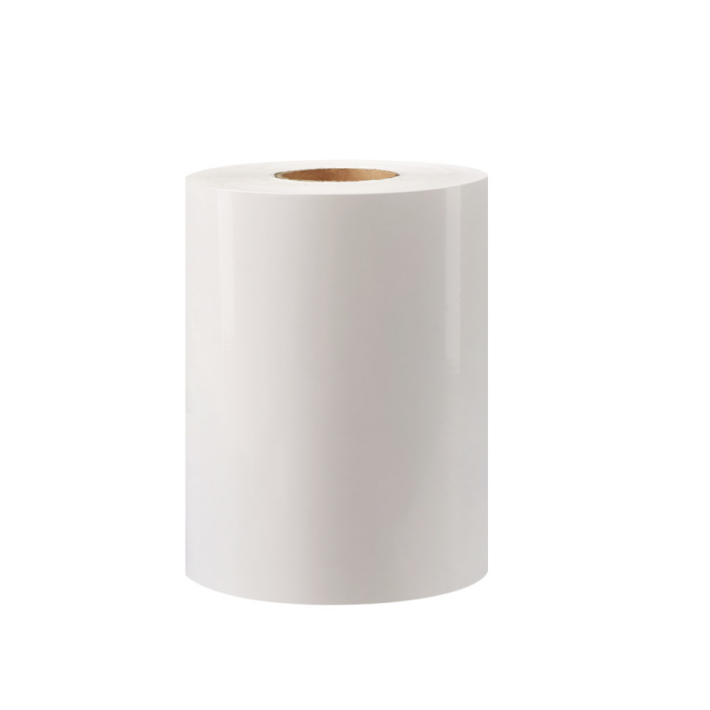
Textile label material refers to the various types of materials used to create labels that are attached to textile products such as clothing, accessories, and home textiles. These labels provide important information about the product, including care instructions, fiber content, size, brand, and country of origin. The choice of material for these labels is crucial as it affects their durability, comfort, appearance, and the ease with which they can be attached to the textile products.

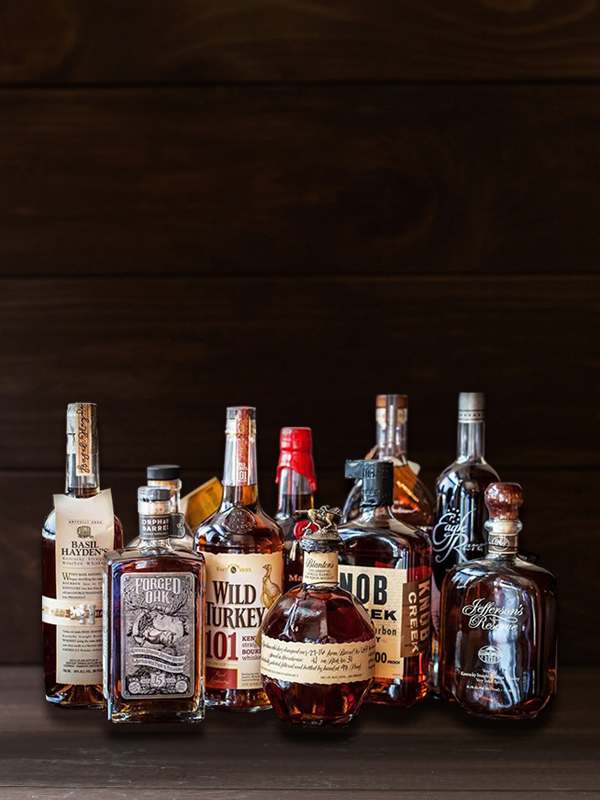
Adhesive labels for bottles look simple on a shelf, but they have to survive a lot: curved surfaces...
View MoreLow-Temperature Freezer Adhesive Labels for Frozen Food | Custom Printed Copper Paper, Synthetic Pap...
View MoreWalk down any supermarket spice aisle and the labels do a lot of quiet work. They tell you whether ...
View MoreDouble Sided Adhesive Tape: PP Base Tape for Cotton Bale Strapping & Coated Paper Double Sided T...
View MoreChoosing an adhesive for labels sounds like a small decision until the first pallet comes back with...
View MoreZhejiang Guanma Packaging Co., Ltd. is a self-adhesive paper and film producer based in Jiaxing, Zhejiang, close to Shanghai. As a Textile Label Material manufacturer in China, we supply removable adhesive stocks that carry size, fibre content, brand and handling information on garments and home textiles, then release cleanly once the label has done its work.
The range is built on two production constructions: a 36 µm transparent PET film and an 80 g semi-gloss coated paper, both coated with removable adhesive on glassine liner. They leave our works as jumbo master rolls, custom slit rolls, die-cut blanks or fully printed finished labels, so a garment programme can draw stock and print from a single source.
A textile label has to do two opposing jobs. It must hold through cutting, folding, cartoning and transport, then peel away at the point of sale, at a wash trial or during re-labelling without pulling fibres or leaving a tacky ghost on the cloth. Removable adhesive is defined by that balance rather than by a single peel number.
Contact area drives the result. A tight worsted weave presents a smooth, continuous surface and builds peel quickly; an open knit, brushed fleece or terry towel presents yarn crowns and air gaps, so the same adhesive reads as gentler there. Coated shells, laminated membranes and elasticated waistbands behave differently again.
We therefore qualify the material against the fabric swatch and the removal window, not against the face stock name alone.
Two constructions sit at the centre of the category, supported by the wider film and paper library we coat for label converters and brand owners.
| Construction | Face and adhesive | Liner | Typical textile and apparel fit | Printing |
|---|---|---|---|---|
| ET8MU30 | 36 µm transparent PET film, removable adhesive | 60 g white glassine; transparent PET liner available | Clear size and brand seals that peel off garments without residue; shampoo and daily-care packs | Flexo, offset, screen, inkjet, laser |
| H1MU30 | 80 g semi-gloss coated paper, removable glue | 60 g yellow glassine or 30 µm transparent PET | Printed care, size, price and promotion labels through retail and warehouse flow | Flexo, offset, screen, inkjet, laser |
| White and matte white PP film | Acrylic, hotmelt or removable adhesive | Glassine | Moisture-resistant tags for damp stores, transport and synthetic surfaces | Flexo, UV, screen, digital |
| Thermal top-coated paper | Acrylic or hotmelt adhesive | Glassine | Variable-data size, barcode and price labels printed on demand | Thermal transfer, flexo |
| PE film | Hotmelt or acrylic adhesive | Glassine or PET | Waterproof laundry-bag, carton and transport identification | Flexo, screen |
Clear polyester on removable adhesive, supplied on 60 g white glassine. Polyester holds its shape through small die-cut geometries and fast dispensing better than paper, and the transparent face lets the garment colour and texture show through a printed logo or size mark. The same logic applies to cosmetic bottles, where the Plastic Bottle Label stocks use comparable removable constructions.
A semi-gloss surface sits between full gloss and matte: bright enough for colour branding, low enough in glare for small type and barcodes to scan reliably. It is the practical choice where the label is printed with dense copy, security marks or care symbols and where opacity matters more than transparency. Converters and printers can review the semi-gloss coated paper with removable adhesive specification in detail.
Every order is fixed against a written construction rather than a product name, because two labels that look alike on the roll can behave very differently on a knitwear line.
We run flexographic, screen, UV, digital and offset printing alongside slitting and die cutting, and supply both blank die-cut unprinted labels and custom printed finished labels. A converter can take master rolls and print on their own press; a brand owner without press capacity can take the finished label, die-cut and packed for the sewing line or the filling hall.
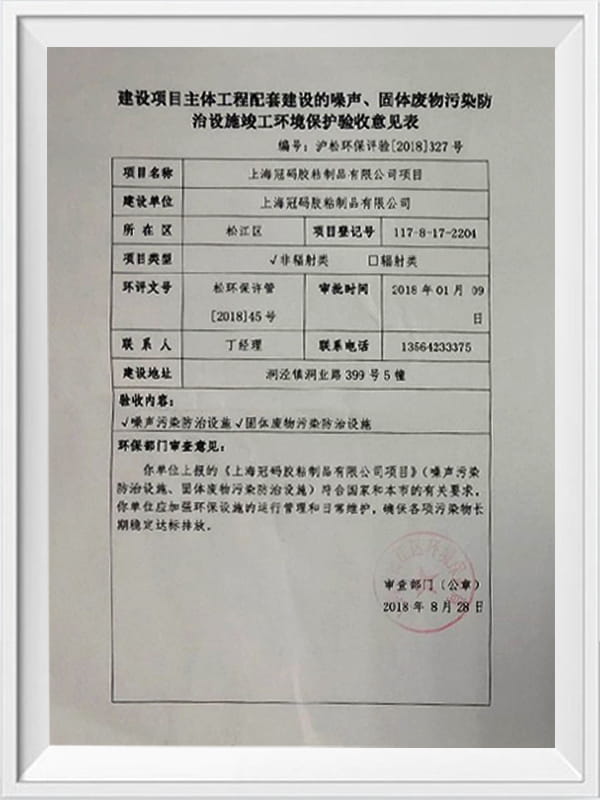
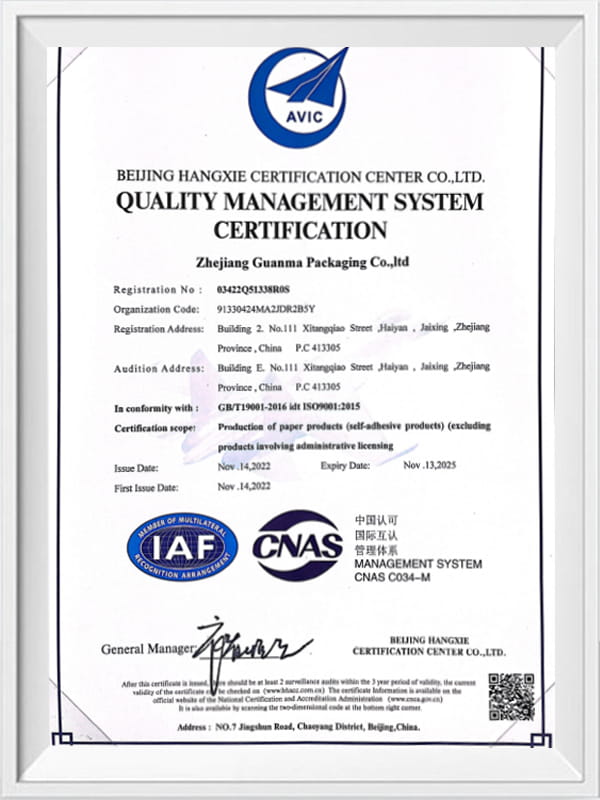
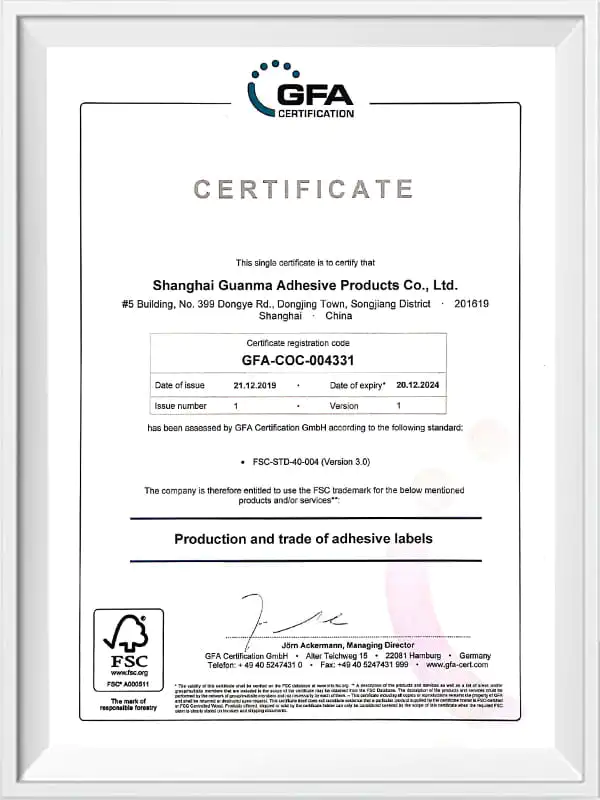
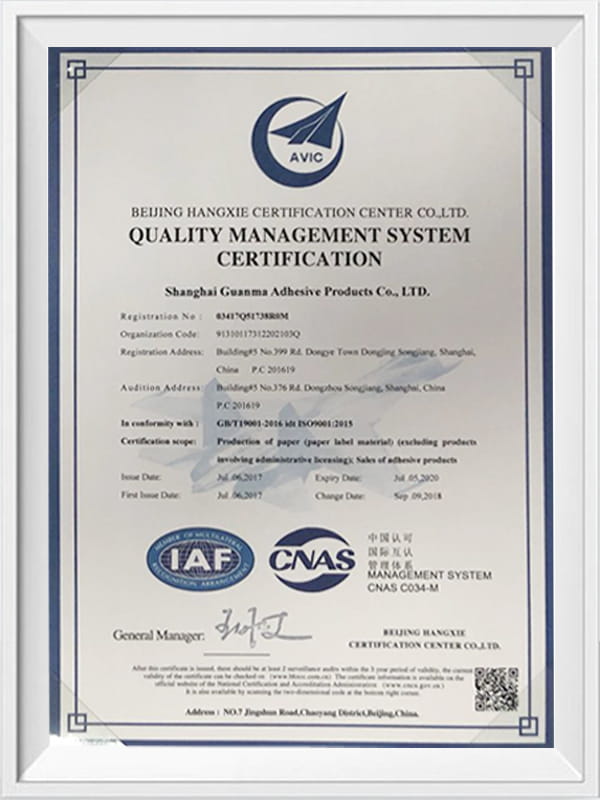
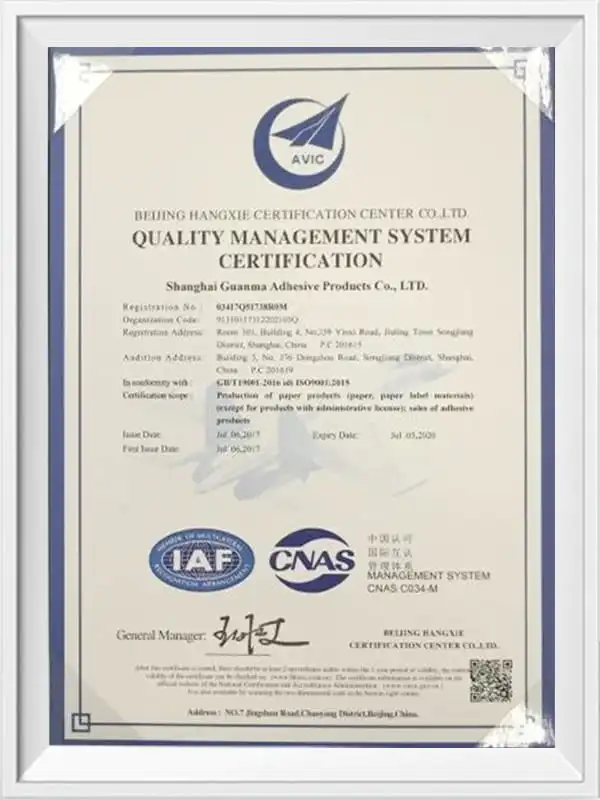
The quality management system is certified to ISO 9001, and inspection runs at three points: material selection, pre-production machine testing, and finished goods verified on the testing machine.
Acceptance criteria are agreed before the first run, so the batch is judged against a written standard rather than a verbal one.
A quotation that holds up in production starts from the working point, not from a catalogue number. The following inputs let us propose the right face, adhesive, liner and roll format in one pass.
Where the fabric is unusual — brushed fleece, elastane-rich jersey, silicone-washed shell — we run the proposed label on sample material before the order is fixed.
Roll wrap, core plugs, pallet pattern and carton marking are agreed with the order so the material reaches the press or the sewing line ready to use, with the adhesive edge and liner protected through sea freight.
Repeat orders are produced to the same approved construction. If a face stock, adhesive or liner has to change, that is confirmed with you before the goods leave Jiaxing rather than discovered at the applicator.
It carries size, fibre content, care instructions, brand identity, price and country of origin on garments, accessories and home textiles. Our two constructions target the removable side of that work: identification that must release cleanly from cloth, thread and packaging, and from shampoo or daily-care bottles in the same retail chain.
Removable adhesive is selected for clean release, and the outcome depends on the fabric, dwell time, temperature and peel speed. Send the swatch and the removal window, and we test the construction on that material. Where a label must survive repeated laundering, a permanent adhesive with a durable face is the correct construction, and we quote it from our acrylic, hotmelt or UV-curable range.
PET film is clear, thin and dimensionally stable, which suits small die-cuts, clear brand seals and high-speed dispensing. Semi-gloss paper is opaque and takes dense print, barcodes and care symbols with less glare, and is normally the lower-cost route for a printed textile label.
Master rolls are 1070 mm wide and can be slit to your press or applicator width, with core diameter and winding direction agreed per order. We also deliver die-cut blanks and finished printed labels where you prefer not to convert in-house.
Flexographic, screen, UV, digital and offset printing are available in-house, and the stock is also prepared for inkjet and laser printing where you add variable data on your own line. Blank unprinted rolls, die-cut blanks and fully printed labels can all come from the same approved construction.
Address : Building 2. No.111 Xincheng Road, Xitangqiao Street, Haiyan, Jiaxing, Zhejiang Province, China
Phone: +86-150 0573 0249
Tel: + 86-0573-8685 2732
Fax: + 86-0573-8685 2732
E-mail: [email protected]
Copyright© Zhejiang Guanma Packaging Co., Ltd.
 Privacy
Textile Label Material Manufacturers Wholesale Textile Labels Suppliers Textile Labels Factory


 English
 русский
 Español
 عربى