

 English
 русский
 Español
 عربى
عربى
Home / News / Industry News / Direct Thermal Synthetic Paper: The Smart Labeling Solution for Furniture, Glass, and Tableware
In industries where labeling must be durable, clean, and residue-free, direct thermal synthetic paper has emerged as a preferred material over traditional adhesive-based label stocks. Unlike conventional paper labels that rely on standard adhesives prone to leaving sticky residue upon removal, direct thermal synthetic paper is engineered with specialized coatings and adhesive formulations that allow for clean, effortless removal — even after extended contact with sensitive surfaces such as furniture finishes, glassware, and tableware. This article explores the material properties, application advantages, and industry use cases that make direct thermal synthetic paper an increasingly popular choice for manufacturers, retailers, and logistics providers.
Content
Direct thermal synthetic paper is a printable substrate made from synthetic polymer films — typically polypropylene (PP) or polyethylene (PE) — rather than traditional wood-pulp paper. The surface is coated with a heat-sensitive layer that darkens when exposed to a thermal printhead, eliminating the need for ink, toner, or ribbons. This direct thermal printing process produces sharp, high-contrast text and barcodes suitable for product labeling, price tags, and identification markers.
What distinguishes this material from ordinary thermal paper is its synthetic base, which provides superior tear resistance, water resistance, and dimensional stability compared to cellulose-based paper. These properties make it particularly well-suited for use on smooth, non-porous, or decorative surfaces where standard paper labels would either fail to adhere properly or leave unsightly residue upon removal.
The residue-free removal characteristic of direct thermal synthetic paper is not accidental — it results from a deliberate combination of material engineering choices:
This combination allows direct thermal synthetic paper labels to be applied, displayed, and later removed without damaging or discoloring the underlying surface — a critical requirement for premium retail goods.
Furniture manufacturers and retailers frequently use direct thermal synthetic paper labels for pricing, model identification, care instructions, and inventory tracking. Furniture surfaces — particularly those with lacquered, varnished, veneered, or painted finishes — are highly sensitive to adhesive residue, which can dull the finish, attract dust, or require solvent-based cleaning to remove.
Because direct thermal synthetic paper is formulated with removable adhesives suited to these delicate finishes, labels can remain affixed throughout the retail display period — sometimes weeks or months — and still peel away cleanly at the point of sale or unboxing. This is especially valuable for high-end furniture pieces where any visible adhesive marks or surface damage could affect the perceived quality of the product.
Glass presents a unique labeling challenge due to its smooth, non-porous, and often decorative surface. Common applications include:
Standard paper labels often struggle on glass because moisture and humidity can weaken adhesion, causing labels to curl or fall off, while permanent adhesives can leave a hazy or sticky film that is difficult to remove without solvents. Direct thermal synthetic paper addresses both issues: its synthetic film base resists moisture absorption, maintaining label integrity in humid or refrigerated retail environments, while its removable adhesive formulation ensures the label lifts away cleanly, leaving the glass surface optically clear and residue-free.
Tableware — including ceramic plates, bowls, cups, and cutlery sets — requires labeling that is both food-safe adjacent and easily removable before the item is used or washed. Direct thermal synthetic paper is widely used for:
Because tableware is frequently glazed or coated with a smooth ceramic finish similar in surface energy to glass, the same clean-release adhesive properties apply. Retailers particularly value this because a label that leaves behind sticky residue on tableware often requires additional cleaning with soap, hot water, or solvents before the item is presentable or usable — an inconvenience that reflects poorly on both the retailer and the manufacturer.
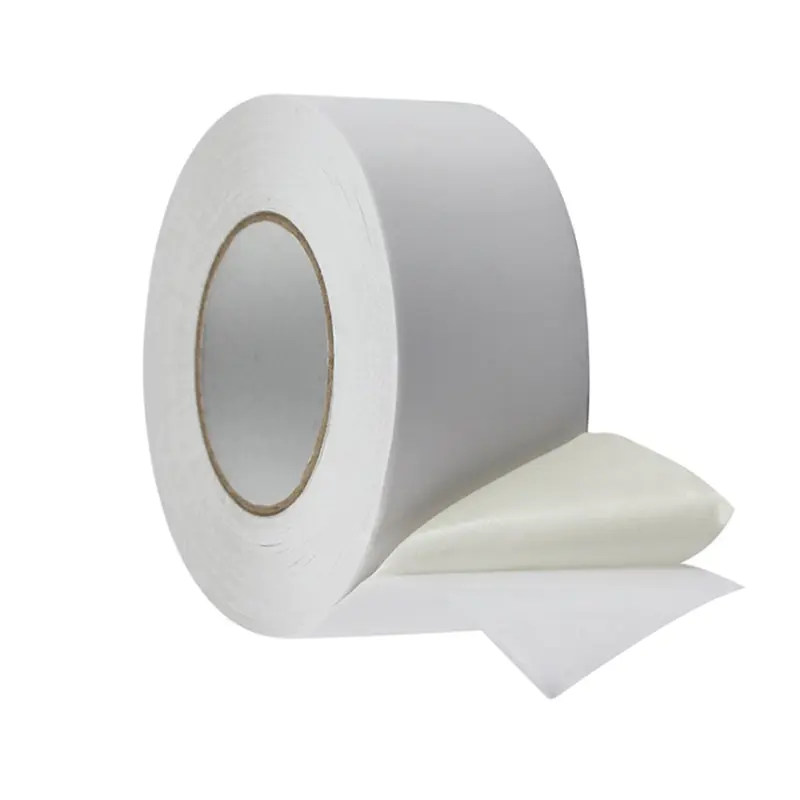
| Characteristic | Direct Thermal Synthetic Paper | Standard Paper Labels |
|---|---|---|
| Base Material | Synthetic polymer film (PP/PE) | Wood-pulp cellulose paper |
| Water Resistance | High | Low to moderate |
| Tear Resistance | High | Low |
| Adhesive Residue on Removal | Minimal to none | Often present, especially after prolonged contact |
| Performance on Glass/Ceramic | Excellent | Poor to moderate |
| Performance on Lacquered Furniture | Excellent | Risk of surface damage |
| Print Method | Thermal printhead, no ink/ribbon required | Often requires ink or toner |
| Suitability for Long-Term Display | High | Limited |
Beyond the technical properties, direct thermal synthetic paper offers practical business advantages. Because the labels can be printed on-demand using direct thermal printers without ink or ribbon consumables, operational costs and printing complexity are reduced compared to traditional label systems. The residue-free removal feature also reduces labor costs associated with post-sale cleaning or refinishing of products, and it minimizes the risk of customer complaints related to sticky residue or surface damage — an important factor in maintaining brand reputation, particularly for premium or design-focused product lines.
Additionally, because the synthetic base resists tearing and moisture damage, labels remain legible and intact throughout shipping, warehousing, and retail display, reducing the need for label replacement and re-application.
Not all direct thermal synthetic papers are created equal, and selecting the appropriate grade depends on the specific application:
Direct thermal synthetic paper represents a significant advancement over traditional adhesive labels, particularly for applications on furniture, glass, and tableware where surface integrity and clean removal are paramount. Its combination of a durable synthetic film base and specially engineered removable adhesives allows businesses to label products confidently, knowing that labels can be removed cleanly without leaving behind unsightly residue or requiring additional cleaning steps. As retailers and manufacturers continue to prioritize both product presentation and operational efficiency, direct thermal synthetic paper is well-positioned to remain a preferred labeling solution across these sensitive, high-visibility product categories.
We have a professional R&D team and strong manufacturing capabilities to ensure product quality and delivery while doing a good job in product iteration and innovation.
Address : Building 2. No.111 Xincheng Road, Xitangqiao Street, Haiyan, Jiaxing, Zhejiang Province, China
Phone: +86-150 0573 0249
Tel: + 86-0573-8685 2732
Fax: + 86-0573-8685 2732
E-mail: [email protected]
Copyright© Zhejiang Guanma Packaging Co., Ltd.
 Privacy
OEM Self Adhesive Label Material Manufacturers Waterproof Labels Suppliers Custom Adhesive Label Material Factory