Content
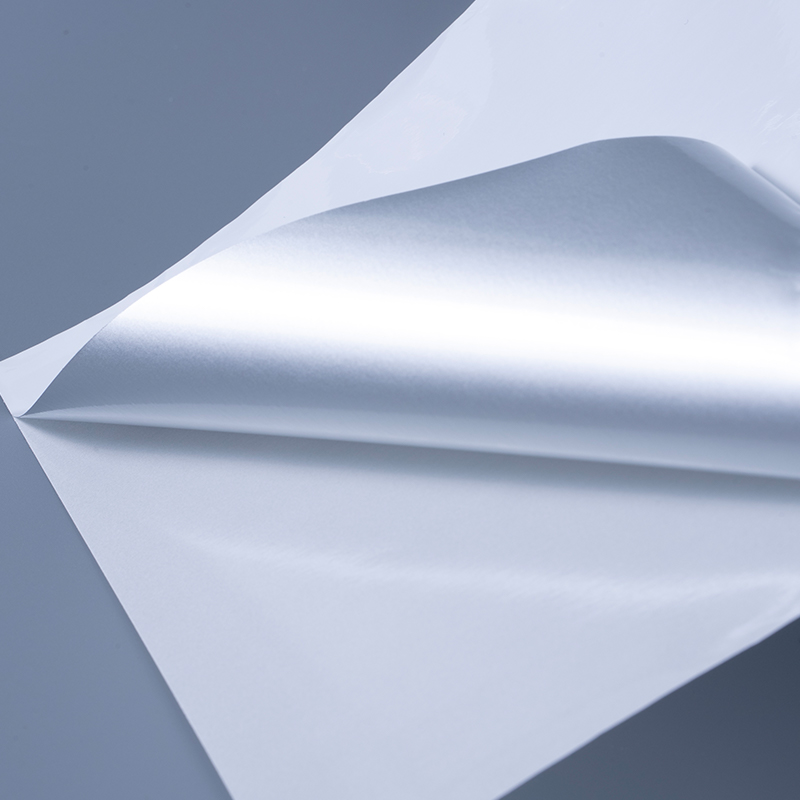
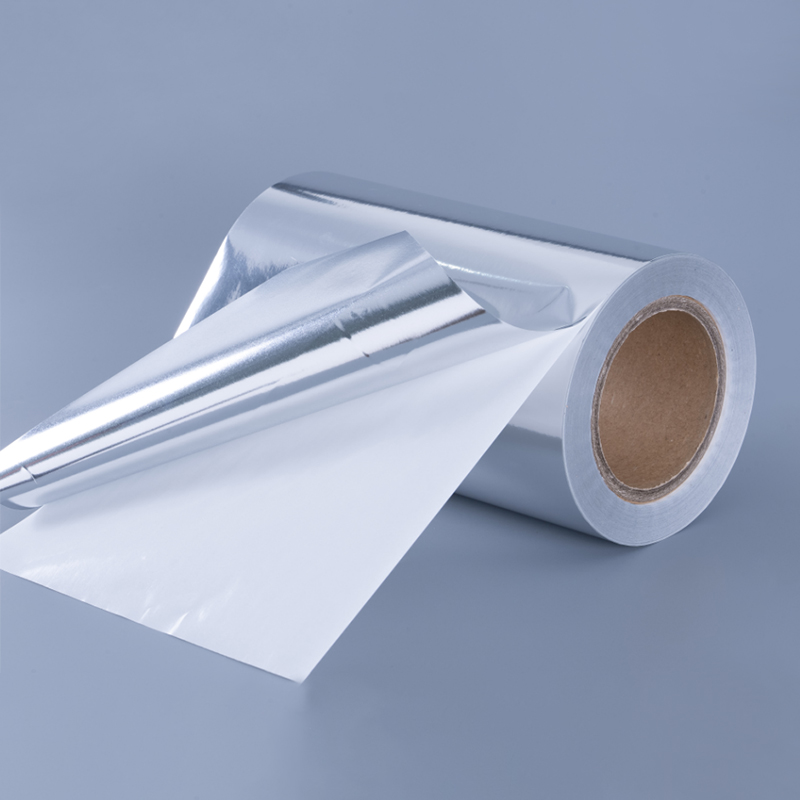
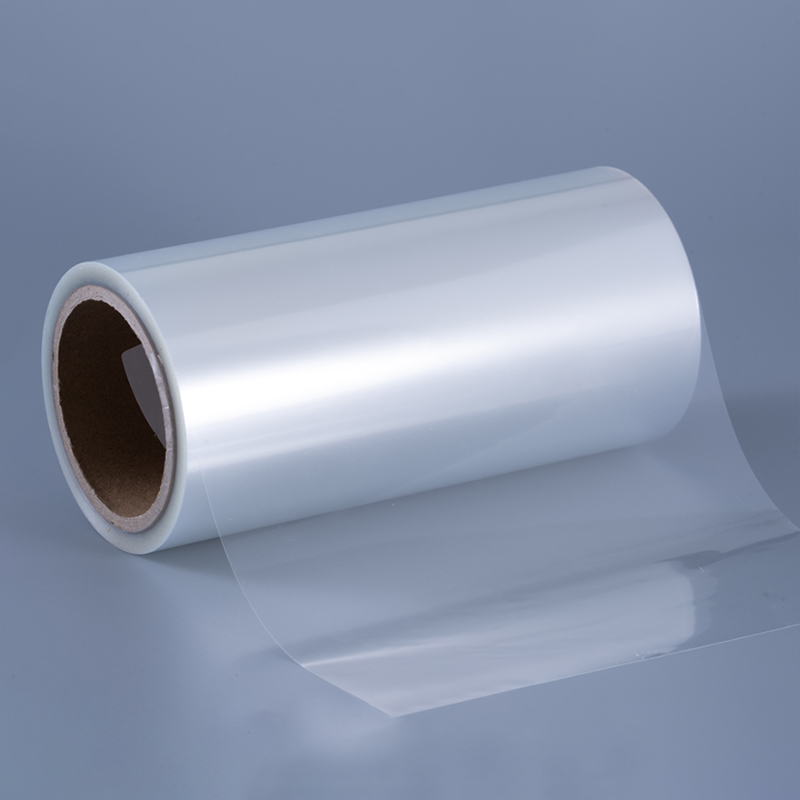
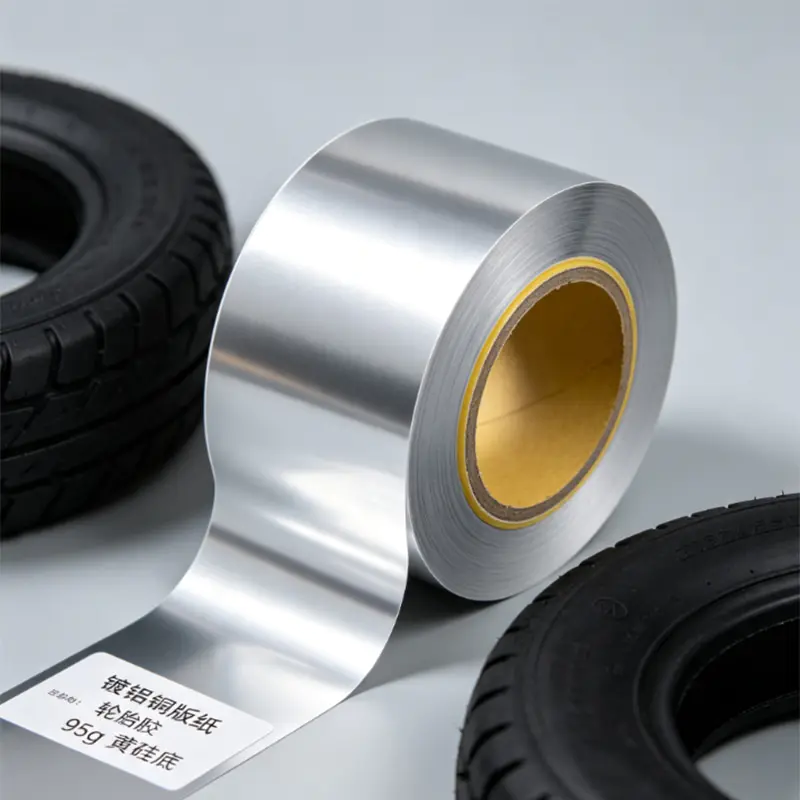
Aluminized PET film — also called metallized polyester film — is a polyethylene terephthalate (PET) base film that has been coated with an ultra-thin layer of aluminum through a vacuum deposition process. The result is a flexible, mirror-like material that combines the structural strength of polyester with the reflective, barrier, and aesthetic properties of metal. When converted into label stock, it produces a finished surface that looks premium, resists moisture and chemicals, and performs reliably across a wide range of environments.
Unlike foil labels, which use actual aluminum foil laminated to a paper or film carrier, aluminized PET film achieves its metallic finish through vapor deposition — meaning the aluminum layer is measured in nanometers rather than microns. This keeps the material lightweight and flexible while still delivering strong barrier performance and a high-gloss metallic appearance. It is one of the most widely used substrates in premium product labeling, industrial identification, and specialty packaging applications.
The production of aluminized PET film starts with a biaxially oriented polyester base film, which is fed into a high-vacuum chamber. Inside the chamber, aluminum wire is heated to its evaporation point, causing aluminum vapor to condense uniformly onto the film surface. The thickness of the deposited aluminum layer typically ranges from 20 to 100 nanometers, depending on the optical density and barrier requirements specified for the end application.
Once metallized, the film is typically treated with a primer or topcoat to improve ink adhesion, lamination bonding, or surface protection. For label applications specifically, surface treatments are critical — without them, standard inks and adhesives may not bond reliably to the smooth, low-energy metallic surface. The final product is wound into rolls and slit to the widths required by label converters for their printing and die-cutting processes.
Aluminized PET film brings together a set of material properties that are difficult to achieve with paper or standard plastic label substrates. Understanding these properties helps clarify why it is specified across so many different labeling contexts.
Biaxially oriented PET has very low elongation and minimal thermal expansion, meaning labels cut from aluminized PET film hold their shape and registration accurately through printing, die-cutting, and application — even under heat or humidity conditions that would cause paper or PE-based films to stretch or distort.
The polyester base is inherently resistant to water, oils, and a broad range of chemicals. The aluminum layer adds an additional vapor barrier, making aluminized PET film labels suitable for products stored in refrigerated, humid, or chemically active environments — including beverages, cosmetics, industrial fluids, and food packaging.
The vacuum-deposited aluminum layer produces a bright, mirror-finish surface that reflects light uniformly. This optical quality makes aluminized PET label film a preferred material for premium consumer goods where shelf appeal and brand perception matter. It also enables the use of transparent ink layers to create color-over-chrome effects that are not achievable on paper or white film substrates.
PET retains its mechanical properties across a wide service temperature range, typically from -40°C to +150°C depending on the specific film grade. This makes metallized polyester label film a reliable choice for applications involving cold chain storage, autoclave sterilization, or proximity to heat sources during product use.
Aluminized PET film is used across a broad range of industries and product categories. The following table summarizes the most common applications and the properties that make it the preferred substrate in each context.
| Application | Industry | Key Property Driving Selection |
| Wine and spirits bottle labels | Beverage | Premium appearance, moisture resistance |
| Cosmetics and personal care packaging | Beauty | Metallic finish, chemical resistance |
| Electronic component identification | Electronics | Dimensional stability, heat resistance |
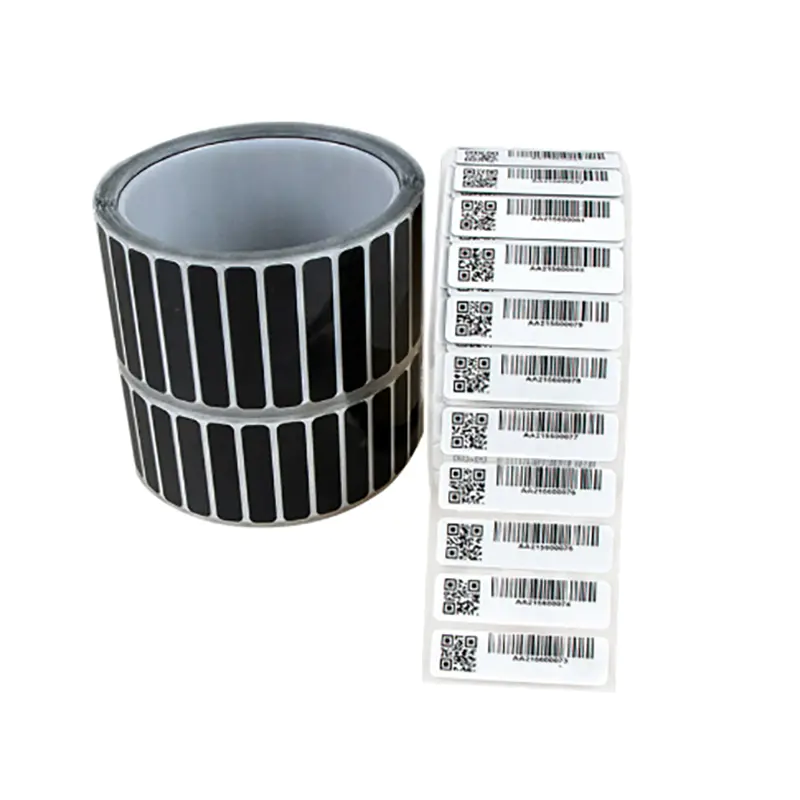
| Asset tracking and barcode labels | Industrial / Logistics | Durability, scan reliability |
| Food and beverage product labels | Food packaging | Moisture and grease resistance |
| Pharmaceutical tamper-evident labels | Healthcare | Barrier properties, printability |
| Promotional and holographic labels | Retail / Brand protection | Optical effects, anti-counterfeiting |
Printing on aluminized PET label film requires more preparation than printing on paper or matte plastic substrates. The metallized surface has low surface energy by default, which means inks and coatings need specific conditions to bond correctly. Most commercially available metallized polyester label films are supplied with a pre-applied primer or corona treatment to raise surface energy to a level suitable for flexographic, gravure, offset, or digital printing processes.
For flexographic and gravure printing — the most common methods used in roll-label production — solvent-based or UV-curable inks designed for film substrates are typically recommended. Water-based inks can be used but require careful formulation matching with the specific surface treatment on the film. Digital printing on aluminized PET film has become increasingly viable with modern inkjet and electrophotographic systems, though compatibility testing with the specific film and primer combination is advised before committing to production runs.
When transparency is part of the design intent — for example, printing colored transparent inks over the metallic background to create a brushed-gold or tinted-chrome effect — ink sequence and opacity management become particularly important. Working with a converter experienced in metallized film label production will help avoid common issues such as adhesion failure, ink crawling, or color shift over the reflective base.
Aluminized PET film is not the only option for metallic label applications. Understanding how it compares to alternatives helps in making the right material selection for a specific use case.
When evaluating suppliers or placing a sourcing inquiry, the following technical parameters are the most important to clarify upfront to ensure the film performs as expected in your specific label production process.
Aluminized PET label film is relatively easy to store compared to paper-based substrates, but a few handling practices will help maintain the surface quality and print performance of the material through to production.
Store rolls vertically or horizontally on a flat surface in a clean, dry environment with relative humidity between 45% and 65% and a temperature between 15°C and 30°C. Avoid prolonged exposure to direct sunlight or UV sources, which can degrade surface treatments over time. When loading rolls onto a press or converting machine, allow the film to acclimatize to the production environment for at least 24 hours, especially if it has been transported through significant temperature differences. Handle rolls by the core rather than the film surface to avoid fingerprints or contact marks that can affect ink adhesion on the metallized face.
We have a professional R&D team and strong manufacturing capabilities to ensure product quality and delivery while doing a good job in product iteration and innovation.
Address : Building 2. No.111 Xincheng Road, Xitangqiao Street, Haiyan, Jiaxing, Zhejiang Province, China
Phone: +86-150 0573 0249
Tel: + 86-0573-8685 2732
Fax: + 86-0573-8685 2732
E-mail: [email protected]
Copyright© Zhejiang Guanma Packaging Co., Ltd.
 Privacy
OEM Self Adhesive Label Material Manufacturers Waterproof Labels Suppliers Custom Adhesive Label Material Factory


 English
 русский
 Español
 عربى
عربى