

 English
 русский
 Español
 عربى
عربى
Home / News / Industry News / Synthetic Paper Labels for Frozen Food: Built for Flexo and UV Digital Inkjet Printing
Content
Labeling frozen food products is one of the most technically unforgiving applications in the packaging industry. Labels applied to frozen or chilled products face a combination of stresses that would destroy conventional paper labels within hours: surface condensation during temperature transitions, frost formation during freezer storage, ice crystals that form between the label and the substrate, and the mechanical stress of repeated handling in cold chain logistics. Add to this the fact that frozen food packaging surfaces are often low-energy polyethylene or polypropylene films that are difficult to bond to under any conditions, and the labeling challenge becomes clear.
Standard paper labels absorb moisture, lose tensile strength when wet, and delaminate from cold surfaces as adhesive performance degrades at low temperatures. The result is labels that peel, wrinkle, tear, or fall off entirely — creating compliance problems, traceability failures, and a poor consumer experience at the point of sale. This is precisely the environment that synthetic paper was developed to address, and it does so in a way that also opens the door to high-quality print results across both conventional flexographic presses and modern UV digital inkjet systems.
Synthetic paper is a plastic-based substrate engineered to mimic the printability and appearance of conventional paper while delivering the moisture resistance, dimensional stability, and durability of a polymer film. The most widely used base materials are biaxially oriented polypropylene (BOPP) and high-density polyethylene (HDPE), both of which are inherently waterproof, tear-resistant, and chemically stable across the temperature ranges encountered in frozen food environments — typically from -25°C in deep freeze storage up to ambient temperatures during distribution and retail display.
Unlike glossy or clear plastic films, synthetic paper is produced with a micro-voided or cavitated internal structure and a surface treatment — typically a multi-layer coextrusion with a receptive topcoat — that gives it an opaque, white, paper-like appearance and a surface energy profile suitable for ink adhesion. This surface is what makes synthetic paper genuinely printable rather than simply moisture-resistant. The topcoat is engineered to accept a wide range of ink systems, which is where the compatibility with both flexographic and UV digital inkjet printing becomes a defining commercial advantage.
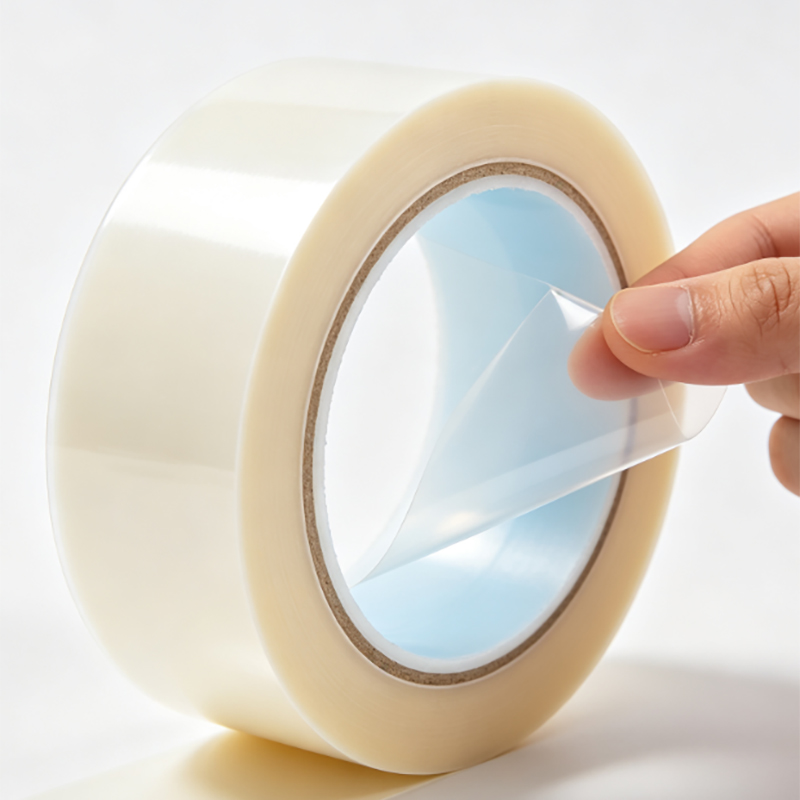
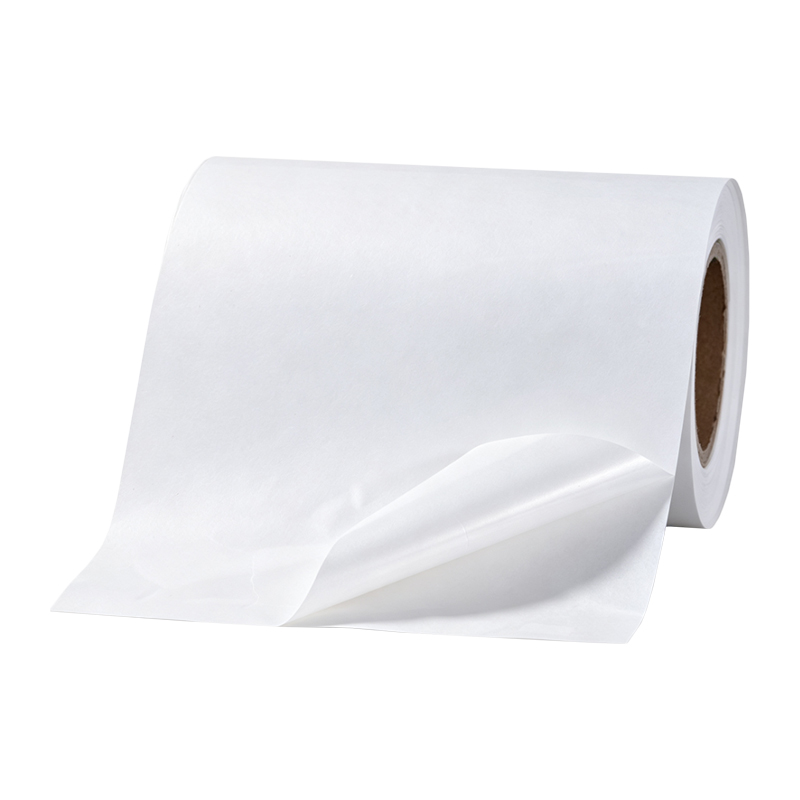
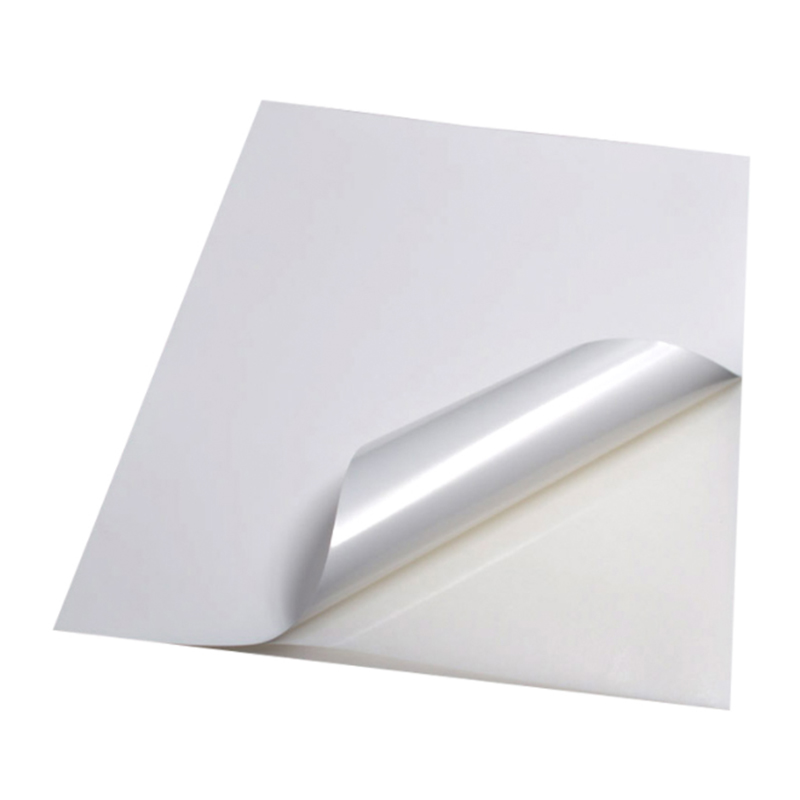
In the context of frozen food labels specifically, synthetic paper is typically supplied as a label construction: the face material (the synthetic paper itself), a pressure-sensitive adhesive formulated for low-temperature and wet-surface application, and a release liner. The adhesive selection is as critical as the face material — a label that prints beautifully but fails to stay adhered to a frost-covered surface at -18°C serves no practical purpose.
UV digital inkjet printing has become the technology of choice for short-to-medium run label production, variable data printing, and applications where fast turnaround and design flexibility are priorities. In this process, UV-curable inks are jetted onto the substrate in precisely controlled droplet patterns and immediately cured by UV light — either mercury arc lamps or LED arrays — that polymerizes the ink film almost instantaneously upon exposure. The result is a fully cured, hard, dry ink layer that does not require evaporation or absorption into the substrate to set.
This curing mechanism is ideally suited to synthetic paper because it eliminates the ink absorption dependency that limits printing on non-porous substrates. On conventional paper, inks partially absorb into the fiber structure as they dry. Synthetic paper has no fiber structure to absorb into, which would be a problem for solvent or water-based inks but is entirely irrelevant for UV-curable systems where the ink film cures on the surface through photopolymerization rather than absorption. The synthetic paper topcoat provides the surface energy and adhesion chemistry needed for the cured UV ink film to bond durably, and the result is print quality — sharpness, color gamut, and opacity — that matches or exceeds what is achievable on coated paper stocks.
For frozen food applications specifically, the UV ink's fully polymerized film structure makes it highly resistant to moisture, condensation, and the surface abrasion that occurs during cold chain handling. The ink does not rehydrate, does not smear when wet, and does not crack when the label substrate flexes during freezing and thawing cycles — all of which are failure modes that limit water-based inkjet and thermal transfer printing in similar environments.
Flexographic printing remains the dominant technology for high-volume label production, and any label substrate that cannot perform reliably on a flexo press is commercially limited regardless of its other technical merits. Synthetic paper engineered for frozen food labels is fully compatible with modern flexographic printing, including UV flexo, water-based flexo, and solvent-based flexo ink systems, though the surface topcoat formulation has a significant influence on which ink types deliver optimal results.
On press, synthetic paper runs smoothly through web-fed flexo presses without the dimensional instability issues that plague some film substrates. Because it is produced as a rigid, low-elongation material rather than a stretchable film, it maintains registration accuracy across multi-color print stations — a critical requirement for high-quality process color reproduction. Its opacity eliminates the show-through issues that can occur with translucent film substrates when printing light colors or white backgrounds.
UV flexo inks are the most consistently recommended system for synthetic paper in frozen food label applications because they offer the same moisture resistance advantages as UV digital inkjet inks. Water-based flexo inks can also be used with properly formulated synthetic paper topcoats, particularly for applications that do not require maximum wet-rub resistance, and they offer an advantage in terms of lower VOC output during production. The key technical parameter to verify when switching a flexo ink system to synthetic paper is surface energy compatibility — the label manufacturer's technical data sheet will specify the dyne level of the surface and the ink families that have been validated against it.
One of the most commercially valuable properties of high-specification synthetic paper for frozen food labeling is its compatibility with both flexographic and UV digital inkjet printing on the same substrate. This dual compatibility gives brand owners and label converters meaningful operational flexibility that translates directly into cost efficiency and production agility.
In practice, many frozen food producers run a base label design that is consistent across a product range — brand identity, regulatory information, nutritional data, certifications — with only a small variable element that differs by SKU, batch, date code, or market. The fixed elements are economically printed in high volume on a flexo press, where per-unit cost is lowest for long runs. The variable elements are then overprinted on a UV digital inkjet system, either inline or offline, at whatever run length is required. Because both processes are validated on the same synthetic paper stock, the converter maintains a single inventory of label material rather than separate stocks for flexo-only and digital-only jobs, simplifying procurement, reducing waste, and eliminating the risk of substrate mismatch between print runs.
This hybrid printing model is particularly relevant for frozen food producers operating across multiple markets with different language requirements, for retailers managing private label ranges with frequent promotional variants, and for manufacturers navigating the increasing regulatory requirement for market-specific label content in food products.
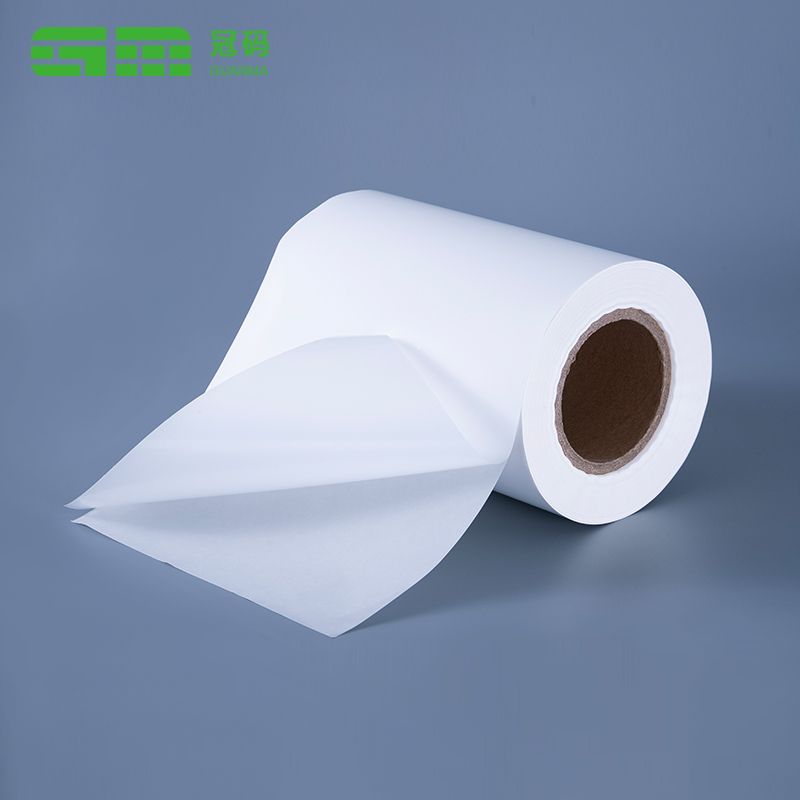
Not all synthetic papers are formulated for the same conditions, and selecting the wrong grade for a frozen food application is a costly mistake that typically only becomes apparent after labels are already in the field. The table below summarizes the specifications most relevant to frozen food labeling performance.
| Parameter | Recommended Specification | Why It Matters for Frozen Food |
| Base Material | BOPP or HDPE synthetic paper | Inherent moisture resistance and dimensional stability at low temperatures |
| Operating Temperature Range | -25°C to +70°C minimum | Covers deep freeze storage through ambient handling and retail display |
| Surface Energy (Dyne Level) | 38–44 dynes/cm after topcoat treatment | Determines ink wetting and adhesion for both flexo and UV inkjet systems |
| Caliper / Thickness | 80–120 µm typical for label face stock | Affects stiffness, die-cutting performance, and press runnability |
| Opacity | >90% (preferably >95%) | Ensures printed colors are accurate regardless of package color underneath |
| Wet Tensile Strength | Retain >80% of dry tensile strength when wet | Prevents tearing during condensation exposure and wet-handling conditions |
| Adhesive Type | Low-temperature or all-temperature PSA, rated for wet/frost surfaces | Critical for adhesion to frost-covered or condensation-wet packaging surfaces |
| Print Validation | Confirmed compatible with UV flexo and UV digital inkjet ink systems | Ensures dual-process capability without reformulating ink or topcoat |
In frozen food labeling, the adhesive is frequently the weak link — not the face material, not the ink. A synthetic paper face stock that performs perfectly under print and environmental testing will still fail in the field if the pressure-sensitive adhesive beneath it is not rated for the specific conditions of frozen food application. There are three adhesive performance scenarios that must be addressed simultaneously: application to a cold or frozen surface, survival through repeated freeze-thaw cycles, and long-term adhesion at sustained low temperatures in freezer storage.
Standard acrylic PSA adhesives are engineered for ambient-temperature application and begin losing tack rapidly below 5°C. Low-temperature acrylic adhesives extend the application window down to -10°C or even -20°C for certain freeze-grade formulations, maintaining sufficient wet tack to bond to cold polyethylene packaging without requiring the surface to be warmed first. Rubber-based PSA systems offer very high initial tack on low-energy surfaces but can suffer from long-term creep and are more susceptible to solvents used in cleaning processes. For the most demanding applications — labeling directly onto frost-covered surfaces without pre-drying — specialized all-temperature adhesives with enhanced moisture displacement properties are available and should be specified explicitly in procurement documents.
Specifying and sourcing synthetic paper for frozen food UV digital inkjet and flexo printing involves several practical decisions beyond the substrate specification itself. The following points address the most common questions that arise during product development and press qualification.
We have a professional R&D team and strong manufacturing capabilities to ensure product quality and delivery while doing a good job in product iteration and innovation.
Address : Building 2. No.111 Xincheng Road, Xitangqiao Street, Haiyan, Jiaxing, Zhejiang Province, China
Phone: +86-150 0573 0249
Tel: + 86-0573-8685 2732
Fax: + 86-0573-8685 2732
E-mail: [email protected]
Copyright© Zhejiang Guanma Packaging Co., Ltd.
 Privacy
OEM Self Adhesive Label Material Manufacturers Waterproof Labels Suppliers Custom Adhesive Label Material Factory