

 English
 русский
 Español
 عربى
عربى
Home / News / Industry News / Self Adhesive Kraft Paper Explained: Types, Uses, and How to Pick the Right One
Content
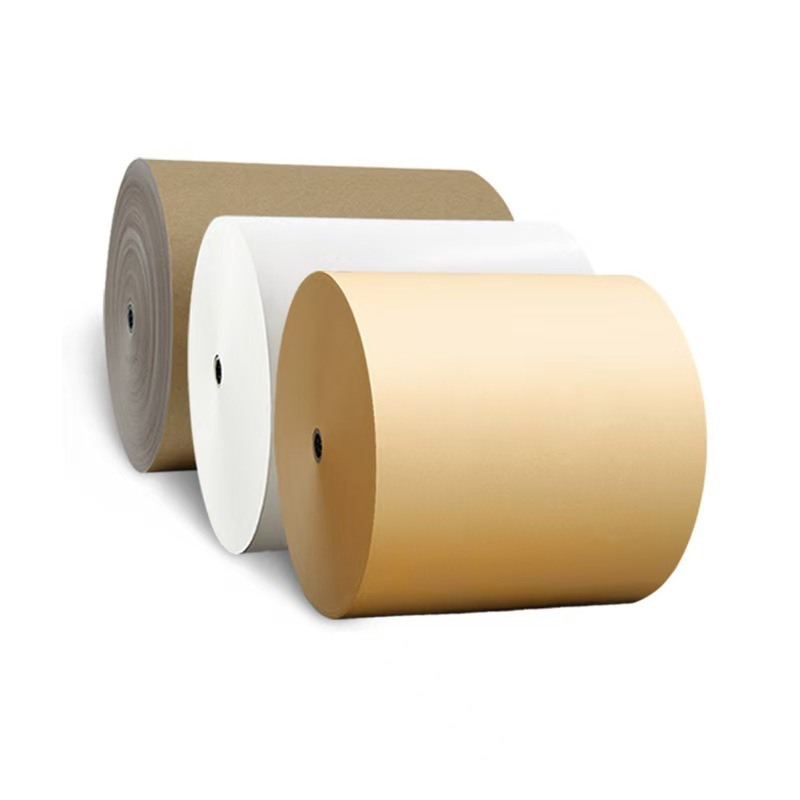
Self-adhesive kraft paper is a composite material that combines a kraft paper face stock with an adhesive layer on the back and a silicone-coated release liner underneath, so the product can be unrolled and applied directly to a surface without needing glue, water, or heat to activate it. The kraft paper itself is the natural brown paper most people recognize from shopping bags and shipping boxes, prized for being made from long wood fibers that give it unusually high tensile strength and tear resistance compared to standard printing or copy paper. When that paper is paired with a pressure-sensitive adhesive coating, the result is a flexible, ready-to-stick material that holds up to handling far better than ordinary paper while still tearing easily by hand when needed.
This category of product is sold in two main physical formats: roll paper and flat sheet paper. Roll format self-adhesive kraft paper is by far the most common, since it suits high-speed dispensing for packaging lines, labeling stations, and masking applications, while flat sheets are typically reserved for smaller batch printing or craft and office use. Within both formats, manufacturers also differentiate between single-sided gloss, double-sided gloss, and striped or textured finishes, giving buyers some flexibility in how the surface looks and feels once applied.
Not all self-adhesive kraft paper serves the same purpose, and choosing the wrong type for a job is one of the most common reasons people end up disappointed with results. Broadly, the category splits into three practical groups based on intended use: labeling products, packaging tape products, and surface protection or masking products. Each group is engineered with a different adhesive strength, paper thickness, and surface treatment to match its job.
It's worth noting that self-adhesive kraft paper tape is functionally different from water-activated kraft paper tape, even though both are brown and made from the same base material. Pressure-sensitive kraft tape uses a hot-melt or acrylic adhesive system that provides immediate tack the moment it contacts a surface, while water-activated tape relies on a starch-based adhesive that needs to be moistened before it bonds. The self-adhesive version is far more convenient for manual packing stations since it requires no water source or dispenser, but the water-activated version typically forms a stronger, more permanent bond because the adhesive actually penetrates the cardboard fibers rather than just sitting on top of them.
The versatility of self-adhesive kraft paper comes from the fact that the same basic construction can be adapted across packaging, retail, renovation, and shipping industries simply by changing the adhesive formula, paper weight, or width. Understanding these common use cases helps clarify which product variant is right for a given job.
In packaging and logistics, self-adhesive kraft paper tape is used to seal and reinforce corrugated boxes, and it has become a popular eco-conscious alternative to standard plastic packing tape. Because kraft paper blends visually with corrugated cardboard, it gives shipments a clean, uniform, brand-friendly look that many companies actively prefer over the shiny appearance of plastic tape. For heavier or higher-value shipments, some manufacturers reinforce their kraft tape with a fiberglass thread pattern embedded in the adhesive layer, which prevents the tape from splitting under stress during transit — a feature particularly useful for shipping electronics or automotive parts where a broken seal could mean lost or damaged inventory.
Self-adhesive kraft paper labels are widely chosen by retail and food businesses that want an earthy, natural aesthetic on their packaging. These labels can be laser or inkjet printed and are compatible with various writing tools, and the natural brown texture has become closely associated with "eco-friendly" branding, even when the underlying packaging strategy involves more than just the label material. Because the labels can be custom printed with text, logos, or barcodes, they are heavily used for jam jars, bakery boxes, coffee bags, and small business product packaging where a handcrafted look matters to the buyer.
A thicker version of self-adhesive kraft paper is specifically designed for masking and surface protection during painting, spraying, or general renovation work. This masking-grade kraft paper is built to prevent paint bleed-through, unlike standard masking tape, and it's commonly used to protect door frames, skirting boards, windowsills, stair treads, and furniture from overspray. Quality masking-grade self-adhesive kraft paper is also formulated so it won't leave a sticky adhesive residue behind, even after extended exposure to direct sunlight, which matters a great deal when the paper needs to stay in place for the full duration of a multi-day painting job.
Since adhesive strength, paper thickness, and temperature tolerance vary significantly between product types, a side-by-side comparison makes it easier to match the right product to the right job before purchasing.
| Product Type | Primary Use | Adhesive Character | Typical Temperature Tolerance |
| Kraft Paper Tape | Carton sealing | Strong, permanent tack | Standard ambient conditions |
| Kraft Paper Labels | Branding and product info | Moderate, printable surface | Sensitive to moisture/humidity |
| Masking-Grade Kraft Paper | Surface protection while painting | Removable, residue-free | Up to roughly 60-80°C |
| Indented Kraft Paper | Void-fill and interleaving | Often non-adhesive or low-tack | Standard ambient conditions |
The growing popularity of self-adhesive kraft paper across packaging, retail, and renovation industries comes down to a handful of practical benefits that are hard to match with plastic-based alternatives. Most of these advantages trace directly back to the natural fiber structure of kraft paper combined with the convenience of a pressure-sensitive adhesive backing.
Despite its advantages, self-adhesive kraft paper isn't the right material for every situation, and a few known weaknesses are worth understanding before placing a large order. Cost is one practical consideration, since kraft paper self-adhesive products generally carry a higher price point than equivalent plastic-based labels or tapes, which can affect the economics of large-scale or low-margin packaging runs.
Environmental sensitivity is another factor to plan around. Kraft paper products are prone to moisture damage and can degrade or curl under extreme humidity or temperature swings, so they're not always the ideal choice for outdoor storage, refrigerated shipping, or high-humidity environments unless a moisture-resistant coating has specifically been added. Adhesion performance can also be inconsistent on certain surfaces, since the paper-backed adhesive doesn't always grip well on rough, dusty, or highly textured materials, and it can lift or fall off over time if applied to a surface it wasn't designed for. Buyers working with unusual surfaces or harsh storage conditions should always request a small sample or test roll before committing to a full production order.
Selecting the correct grade of self-adhesive kraft paper comes down to matching a handful of specifications to your actual use case rather than buying based on price alone. The basis weight of the paper, typically measured in grams per square meter (g/m²), is one of the first things to check, since lighter grades around 40 to 120 g/m² suit retail labels and lighter packaging tasks, while heavier grades upward of 140 g/m² are better suited to industrial sealing, reinforcement, or masking jobs that need to resist tearing under stress.
Adhesive type matters just as much as paper weight. A hot-melt or acrylic pressure-sensitive adhesive gives instant tack and is the most practical option for fast-paced manual packing lines, while specialty formulations exist for removable, residue-free applications like painter's masking paper. Surface compatibility should also be tested ahead of a full order: smooth cardboard, glass, and painted drywall generally accept self-adhesive kraft paper well, but heavily textured, oily, or dusty surfaces can cause adhesion failures regardless of how strong the adhesive is rated to be. Finally, consider whether the application needs UV resistance, water resistance, or printability, since these add-on properties usually require a specifically formulated grade rather than a generic kraft roll.
| Selection Factor | What to Check |
| Basis Weight | 40-120 g/m² for labels; 140+ g/m² for heavy-duty sealing or masking |
| Adhesive Type | Hot-melt/acrylic for instant tack; removable formulas for temporary masking |
| Surface Compatibility | Test on rough, dusty, or oily surfaces before bulk ordering |
| Environmental Exposure | Confirm humidity and temperature tolerance for storage and end use |
| Printability | Verify compatibility with laser, inkjet, or flexographic printing as needed |
Getting clean, reliable results from self-adhesive kraft paper is mostly a matter of preparation rather than skill. Surfaces should be clean, dry, and free of dust before application, since trapped debris under the paper is one of the most common causes of early peeling or bubbling. For masking-grade paper used in painting projects, applying the paper in long, even strips and pressing firmly along the full length helps create a tight seal that prevents paint bleed-through underneath the edge.
With the right grade selected for the job and a bit of care during application, self-adhesive kraft paper consistently delivers a clean, professional, and environmentally conscious result across packaging, branding, and renovation work alike.
We have a professional R&D team and strong manufacturing capabilities to ensure product quality and delivery while doing a good job in product iteration and innovation.
Address : Building 2. No.111 Xincheng Road, Xitangqiao Street, Haiyan, Jiaxing, Zhejiang Province, China
Phone: +86-150 0573 0249
Tel: + 86-0573-8685 2732
Fax: + 86-0573-8685 2732
E-mail: [email protected]
Copyright© Zhejiang Guanma Packaging Co., Ltd.
 Privacy
OEM Self Adhesive Label Material Manufacturers Waterproof Labels Suppliers Custom Adhesive Label Material Factory