

 English
 русский
 Español
 عربى
عربى
Home / News / Industry News / PP Synthetic Paper Labels for Frozen Food: Flexo and UV Digital Inkjet Printing Compatibility Guide
Content
Labeling frozen food products is one of the most technically demanding applications in the entire label industry. The environment a frozen food label must survive is genuinely hostile: temperatures as low as -30°C in deep-freeze storage, heavy condensation cycles as products move between freezer, refrigerated display, and the consumer's hands, direct contact with ice, frost, and water, and the constant mechanical stress of handling in cold chain logistics. Standard paper labels simply cannot survive these conditions — they absorb moisture, delaminate from the substrate, lose print clarity, and fall off entirely, creating compliance, traceability, and brand presentation failures.
This is precisely why PP synthetic paper has become the material of choice for frozen food labels among serious food manufacturers, co-packers, and label converters worldwide. PP — polypropylene — synthetic paper combines the printability and tactile qualities of paper with the physical resilience of a plastic film, giving it a unique position in the label material market. It looks and feels like premium coated paper, but it behaves like a plastic when exposed to water, ice, and temperature extremes.
Beyond physical performance, the growing adoption of digital production workflows in the label industry has created demand for materials that work equally well with both traditional flexographic printing — the industry workhorse for high-volume runs — and UV digital inkjet printing, which enables short runs, variable data, and rapid design changes. PP synthetic paper uniquely satisfies both requirements, making it one of the most versatile and future-proof label substrates available for frozen food applications today.
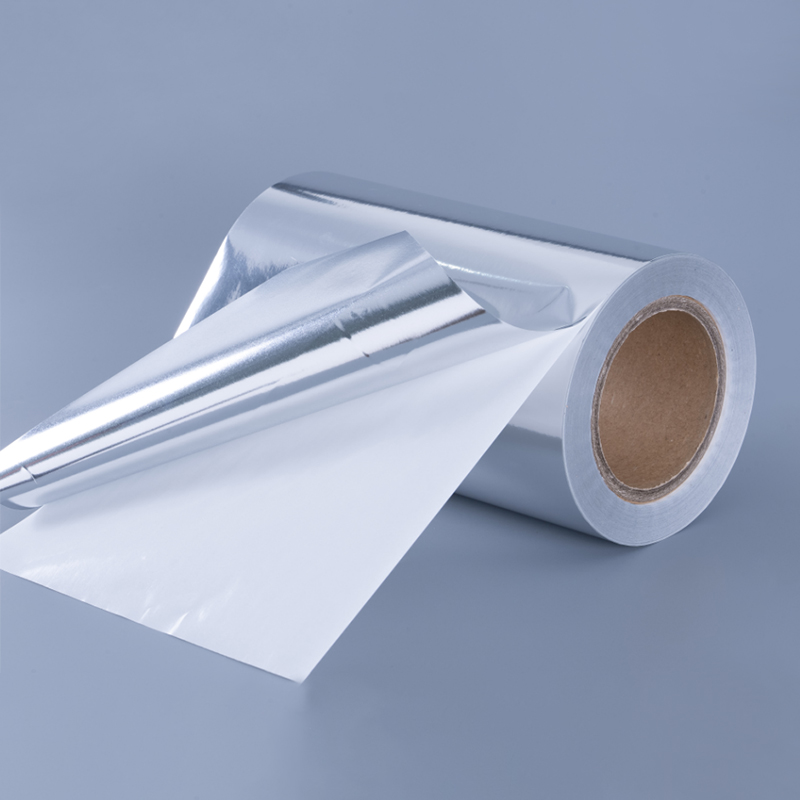
PP synthetic paper is a printable film substrate manufactured from biaxially oriented polypropylene (BOPP) or filled polypropylene resin. Unlike standard plastic films, which are smooth and non-absorbent, PP synthetic paper is engineered with a micro-porous or surface-treated top coating that gives it paper-like ink receptivity, opacity, and surface texture. The result is a material that accepts printing inks with the clarity and sharpness expected of coated paper, while maintaining all the physical properties of a polypropylene film.
Most PP synthetic paper products used in label applications are constructed as a multilayer structure: a base layer of polypropylene resin (often calcium carbonate-filled for opacity and stiffness), one or more intermediate layers providing mechanical strength, and a surface coating layer specifically engineered to bond with printing inks and adhesives. The total caliper (thickness) of label-grade PP synthetic paper typically ranges from 80 to 200 microns, with 100 to 120 micron grades being most common for pressure-sensitive frozen food labels.
The surface energy of PP synthetic paper is a critical parameter for printing performance. Untreated polypropylene has a naturally low surface energy (around 30 mN/m), which causes inks and adhesives to bead up rather than wet out and adhere properly. To overcome this, the printable surface of PP synthetic paper is corona-treated during manufacture — a process that oxidizes the surface and raises its surface energy to 38 mN/m or higher — and then further enhanced with a specialized coating that provides the precise ink absorption and dot gain characteristics required for both flexographic and UV digital inkjet printing.
The performance advantages of PP synthetic paper over paper and standard film labels in frozen food applications are significant and well-documented. Here is a detailed comparison of the properties that matter most:
| Property | PP Synthetic Paper | Standard Paper Label | Clear BOPP Film Label |
| Water Resistance | Excellent — fully waterproof | Poor — absorbs moisture | Excellent |
| Low Temperature Performance | Stable down to -30°C | Brittle, delaminates | Good, but may crack |
| Opacity / Whiteness | High — paper-like white | High | Transparent (no opacity) |
| Tear Resistance | Very high | Low when wet | High |
| Print Surface Feel | Paper-like, matte or semi-gloss | Paper-like | Plastic/film feel |
| Flexo Print Compatibility | Excellent | Excellent | Good (requires surface treatment) |
| UV Digital Inkjet Compatibility | Excellent (with correct coating) | Variable | Good |
| Frost/Condensation Resistance | Excellent | Fails | Good |
| Label Application in Cold | Compatible with cold-apply adhesives | Poor adhesive performance | Compatible |
The combination of full waterproofing, low-temperature dimensional stability, and paper-like printability is what sets PP synthetic paper apart. It doesn't absorb water, so it won't swell, wrinkle, or lose adhesion when condensation forms on the package surface. It remains flat and dimensionally stable at deep-freeze temperatures where paper-based labels become brittle and crack. And its engineered surface coating produces print results that are visually indistinguishable from premium coated paper labels — which matters enormously for premium frozen food brands that cannot afford to sacrifice shelf presence for functional performance.
Flexographic printing remains the dominant production method for high-volume pressure-sensitive label production worldwide, and PP synthetic paper is fully compatible with modern water-based, solvent-based, and UV-cured flexo ink systems. For label converters producing large runs of frozen food labels — typically 50,000 units and above — flexo offers the lowest cost per label, the fastest production speeds, and excellent color consistency across the run.
UV-cured flexo inks are strongly recommended for frozen food label applications on PP synthetic paper. UV flexo inks cure instantly under UV lamps rather than drying through absorption or evaporation, which means they sit on the surface of the synthetic paper rather than being absorbed into it — perfectly suited to a non-absorbent substrate. The cured ink layer is extremely resistant to water, frost, abrasion, and chemical contact, which is exactly what a frozen food environment demands. Water-based flexo inks can also be used on PP synthetic paper when the surface coating is specifically designed for water-based ink receptivity, but they generally require a UV overlaminate or varnish to achieve the moisture resistance required for frozen food labels.
When running PP synthetic paper on a flexo label press, several parameters need careful attention to achieve optimal results:
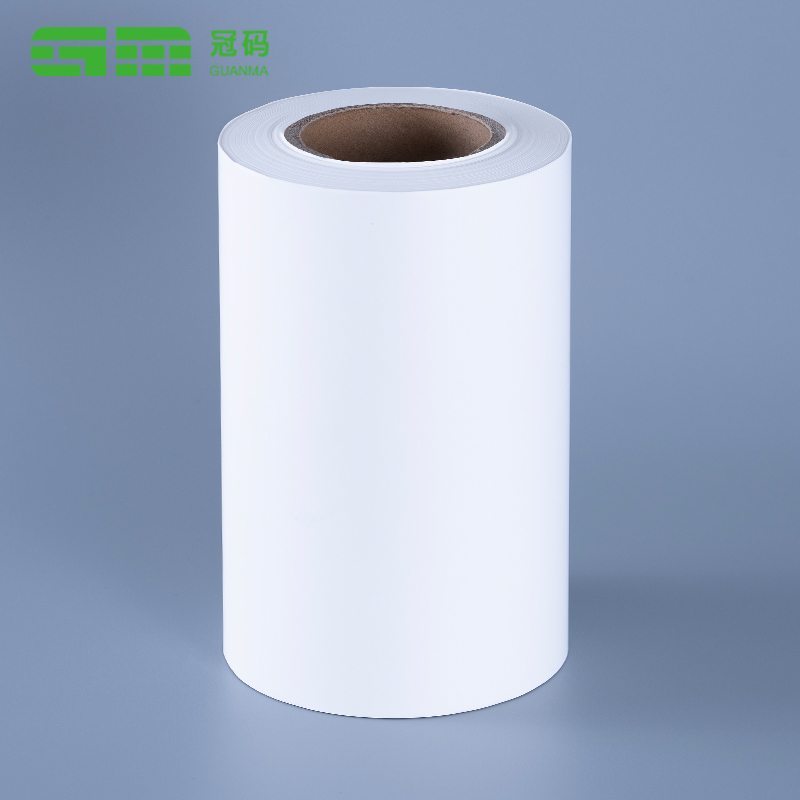
UV digital inkjet printing has transformed the label industry over the past decade, enabling economical short runs, rapid prototyping, personalization, versioning, and variable data printing that were impossible with conventional print processes. For frozen food label applications, UV digital inkjet on PP synthetic paper is an excellent combination — provided the synthetic paper grade is correctly specified for digital inkjet compatibility.
UV inkjet inks are jetted as tiny droplets onto the substrate surface and then immediately pinned and cured by UV or UV-LED lamps positioned close to the print heads. Because the ink cures on the surface rather than being absorbed, the substrate does not need to be absorbent — which is one of the fundamental reasons why PP synthetic paper is compatible with UV inkjet. The engineered surface coating of digital inkjet-grade PP synthetic paper is designed to control droplet spread and dot gain precisely, ensuring sharp text, fine lines, and clean halftone dots across the full color gamut. The result is print quality that rivals or exceeds conventional flexo on many jobs.
Not all PP synthetic paper grades perform equally on UV digital inkjet presses. The surface coating chemistry must be matched to the specific ink chemistry and jetting characteristics of the inkjet press being used. When specifying PP synthetic paper for UV digital inkjet frozen food labels, confirm the following with your material supplier:
One of the most powerful capabilities of modern label production is hybrid printing — combining flexo printing stations with inline UV digital inkjet heads on a single press pass. This approach allows label converters to print static design elements, background colors, and spot colors in flexo (maximizing color vibrancy and cost efficiency at volume) while using the digital inkjet stations for variable data, personalization, versioning, or promotional elements that change between label runs. PP synthetic paper's dual compatibility with both print processes makes it ideal for hybrid production. A single substrate can be purchased, stored, and run on both dedicated flexo presses and hybrid flexo-digital presses, simplifying inventory management and reducing converter complexity.
Even the best-printed PP synthetic paper label will fail in frozen food service if the adhesive isn't correctly specified. The adhesive must maintain strong, permanent bond to the package substrate — which may be polyethylene, polypropylene, coated board, glass, or metal — across the full temperature and humidity range of the cold chain. Standard permanent acrylic adhesives designed for ambient-temperature applications will lose tack and peel at freezer temperatures. The correct adhesive choice depends on the specific substrate, application temperature, and service conditions:
If you're a brand owner, label converter, or packaging engineer evaluating PP synthetic paper for frozen food label applications, here is a practical checklist of the key specification and sourcing decisions to work through:
We have a professional R&D team and strong manufacturing capabilities to ensure product quality and delivery while doing a good job in product iteration and innovation.
Address : Building 2. No.111 Xincheng Road, Xitangqiao Street, Haiyan, Jiaxing, Zhejiang Province, China
Phone: +86-150 0573 0249
Tel: + 86-0573-8685 2732
Fax: + 86-0573-8685 2732
E-mail: [email protected]
Copyright© Zhejiang Guanma Packaging Co., Ltd.
 Privacy
OEM Self Adhesive Label Material Manufacturers Waterproof Labels Suppliers Custom Adhesive Label Material Factory