

 English
 русский
 Español
 عربى
عربى
Home / News / Industry News / Self-Adhesive Labeling: A Practical Guide to Materials, Adhesives & Selection
A label that peels off a frozen food package at -25°C is not a small defect. It is a supply chain problem. The same goes for a cable identification label that smudges when an operator wipes it with solvent, or a tire sticker that lifts as soon as the rubber flexes. When you source self-adhesive labeling materials, the real cost of a wrong specification is not a wasted roll. It is a delayed shipment, a rejected batch, or a brand reputation issue that lasts longer than any label.
The conclusion up front: self-adhesive labeling performance is decided by how well the facestock, adhesive, and release liner match the actual application. This guide explains those variables with practical examples from everyday industrial label production.
Content
Self-adhesive labeling, also known as pressure-sensitive labeling, relies on an adhesive that bonds to a surface the moment pressure is applied. No heat, water, or external solvent is needed at application time. Because of this, it has become the default labeling method for packaging, logistics, product identification, and industrial marking.
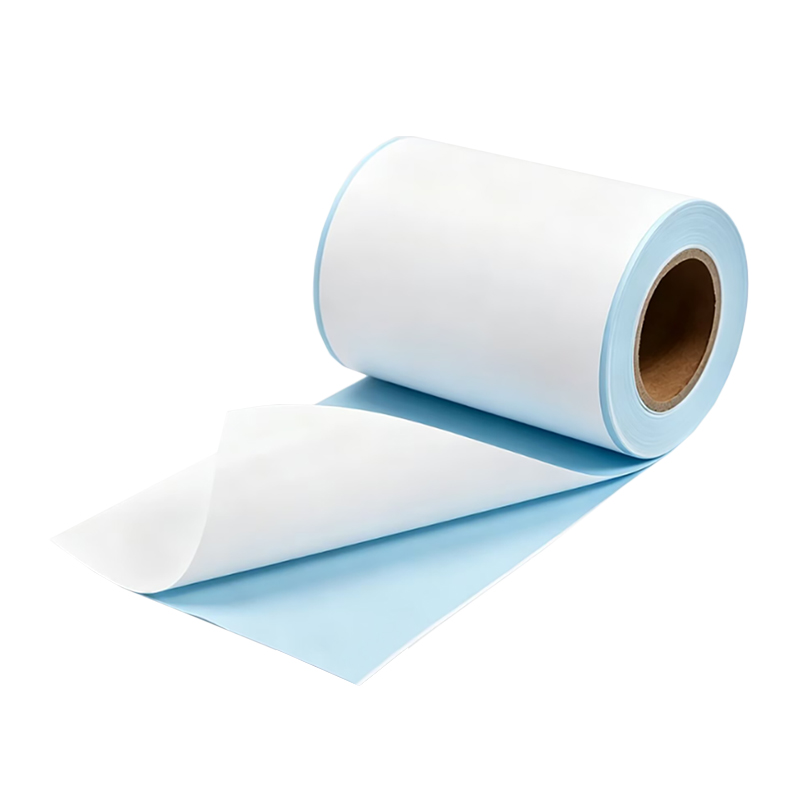
The material is not a single sheet. It is a composite construction made of several layers that work together. Understanding each layer is the first step to reading a specification sheet and knowing what will actually perform on your line.
Every self-adhesive label construction has four functional layers. Overlooking one of them is how labels end up failing in the field.
The facestock is the printable face of the label. It can be paper or film. Paper options include woodfree paper, kraft paper, and thermal paper, which are economical and easy to print but less resistant to water and chemicals. Film options include PP, PET, and PE films, which offer waterproofing, clarity, and mechanical strength. In Guanma's catalog, facestocks range from transparent PP film to matte silver PET, glossy white PP, and synthetic papers designed for harsh environments.
The adhesive is the most application-sensitive layer. A water-based acrylic adhesive works well for indoor packaging and general logistics. A solvent acrylic adhesive is stronger when the label will meet alcohol, oil, or industrial chemicals. Hot melt and rubber-based adhesives deliver high tack and high shear on cold or rough surfaces. There are also removable adhesives, UV adhesives, and freeze-resistant formulations. Guanma produces these in various combinations, including rubber-based, water-based acrylic, removable, hot melt, UV, and high/low-temperature adhesives.
The release liner is the carrier paper or film that protects the adhesive until application. White glassine and yellow glassine liners are standard for paper labels. PET release liners add dimensional stability and are useful for transparent film labels applied at high speed. Liner choice affects die-cutting, matrix removal, and dispensing on automatic applicators.
| Adhesive type | Key properties | Typical uses |
|---|---|---|
| Water-based acrylic | Good tack, cost-effective, works indoors | General packaging, logistics, paper labels |
| Solvent acrylic | Resists alcohol, oil, and chemicals | Battery labels, cosmetics, outdoor use |
| Hot melt | Fast bonding, strong tack, handles cold surfaces | Frozen food, tyre labels |
| Rubber-based | High tack and peel on rough substrates | Tyre labels, woven bags, plastic bags |
| Removable | Low residue, leaves no sticky ghost | Wet wipes, textiles, glass surfaces |
| UV and high/low temp | Stable across temperature ranges | Outdoor labels, high-temperature environments |
After understanding the construction, the next question is which combination fits your product. The following scenario breakdown covers the most common industrial demands.
Frozen food packaging spends its life at -18°C or lower. Standard rubber adhesives lose tack quickly in those conditions. What is needed is a frozen adhesive, typically with a synthetic PP or thermal synthetic paper facestock and a liner that withstands moisture. Guanma's frozen food label line includes matt white synthetic PP with frozen adhesive and thermal synthetic paper with frozen adhesive.
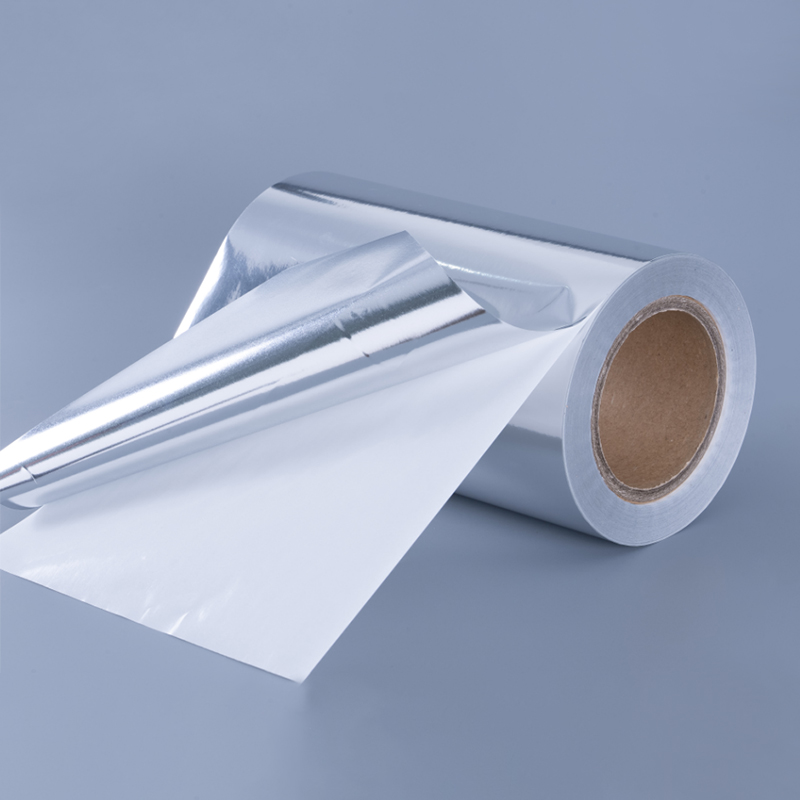 Freezer Food Labels Material Manufacturers50um bright siliver metalised PP/ re-inforced acrylic glue /60g white glassine linerView Product →
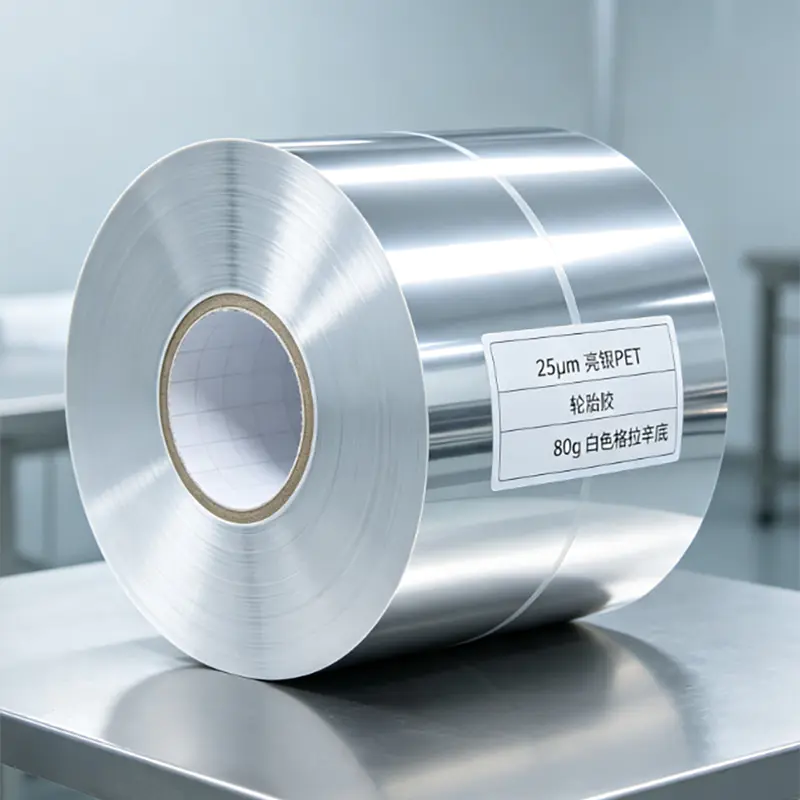
If a label has to survive rain, UV light, solvents, or high temperatures, a PET film facestock with a solvent acrylic or UV adhesive is a safer choice. A 50um matte silver PET with a strong solvent adhesive, for example, is designed for products that come into contact with oils and solvents.
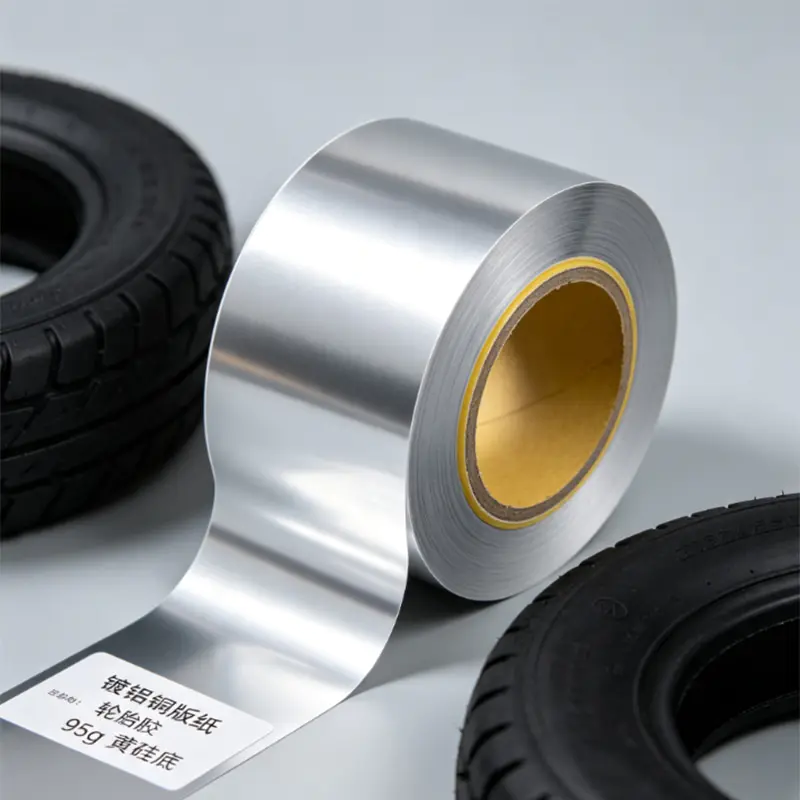
Tyre labels face shear stress, flexing, and the greasy surface of rubber. A rubber-based adhesive with strong tack and high peel is the standard solution. Guanma's tyre label materials use stronger adhesion rubber glue precisely because the label must not lift during tire assembly or use.
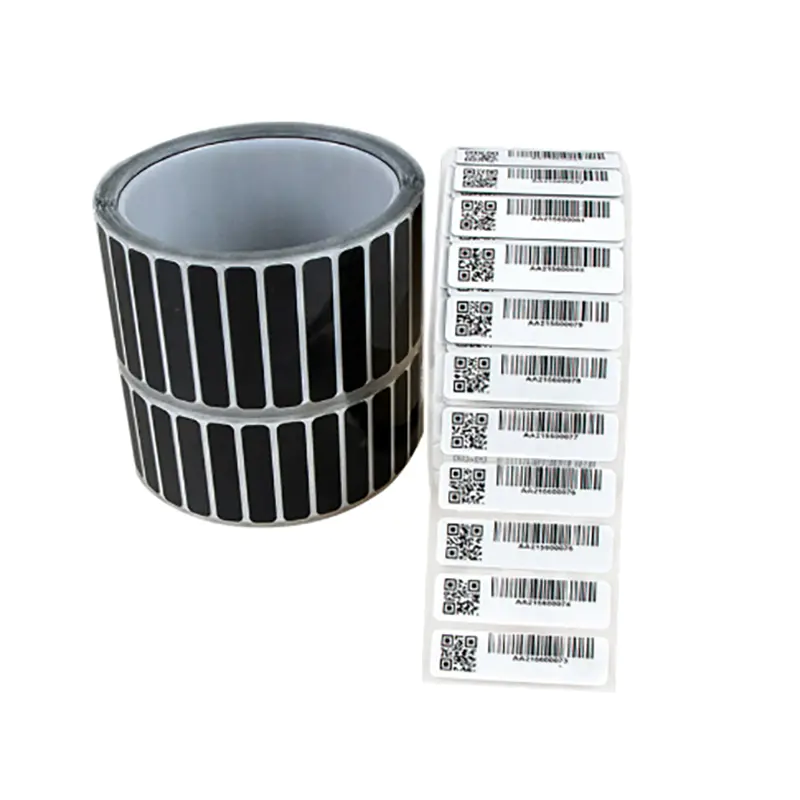 Tyre Label ManufacturersVulcanized tyre label material ( bright white & matt white)View Product →
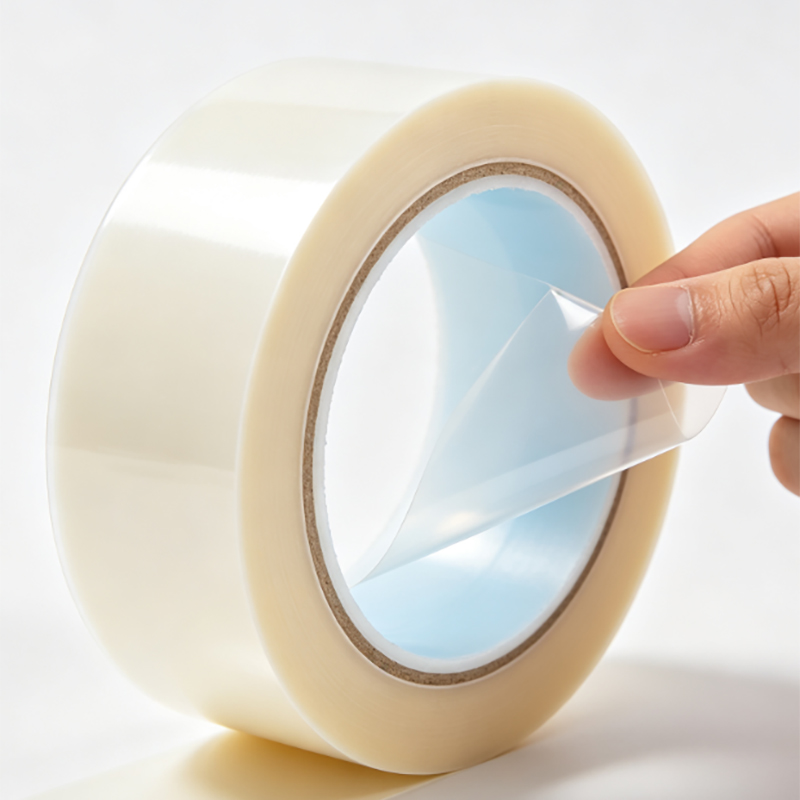
Squeeze bottles and wet wipe packs create moisture and sometimes surface contamination. Transparent PP film with permanent or removable adhesive performs well, and it is also printable with modern flexo and digital presses. Guanma's wet wipes materials include 50um transparent PP with white glassine liner, 80um white calendered PP, and removable 80um transparent PP film.
The label market has shifted significantly toward digital printing. An inkjet-printed label needs a facestock with a topcoat that accepts the ink without bleeding or de-laminating. Guanma offers dedicated self-adhesive inkjet materials, including inkjet clear PET, inkjet matte white PP, inkjet silver PET, and inkjet coated paper.
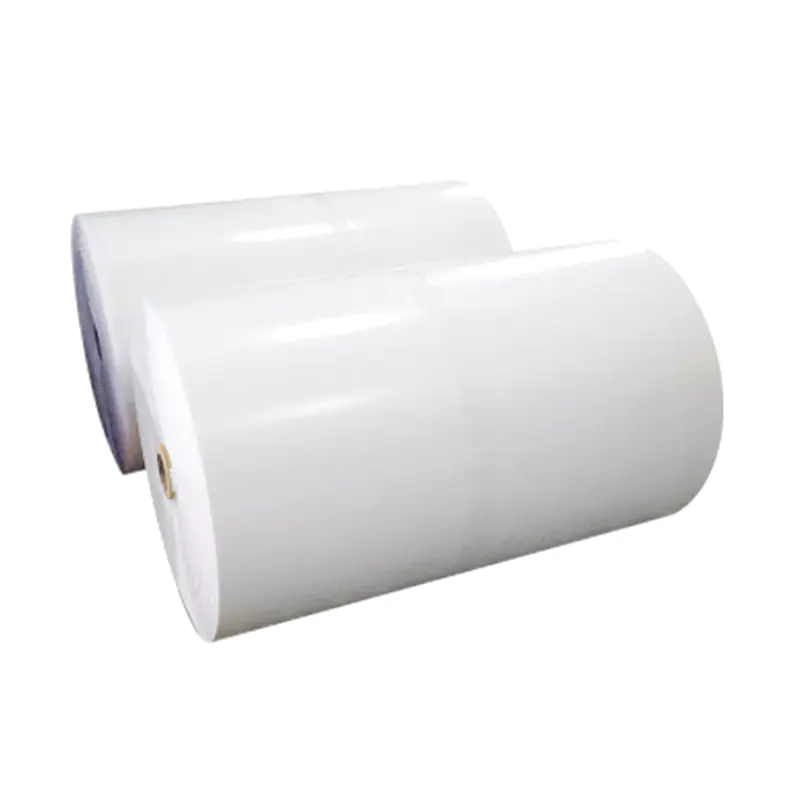 Inkjet Print Label Material ManufacturersSemi Gloss Inkjet PaperView Product →
When you sit down with a material specification, run through these five questions in order: What surface is the label going on? What temperature extremes will it see? Will it meet water, chemicals, or UV light? How will it be printed – flexo, offset, screen, inkjet, or laser? And does it need to be permanent or removable? Those answers narrow the specification faster than any sales brochure.
For a deeper look at the selection logic, read how to choose the right self-adhesive label material.
Even with a good material, failures happen. Most are avoidable.
The material itself is half the equation. The supplier is the other half. For a converter or a brand that uses labels at scale, a supplier that understands how facestock, adhesive, and liner interact under real conditions is worth more than a slightly lower price per roll. Consistency across jumbo rolls matters for production speed, and the ability to supply both paper and film materials in one product family reduces supplier management overhead.
Guanma, based in Jiaxing, Zhejiang and close to Shanghai, has produced self-adhesive paper and film materials for more than 10 years. Its portfolio includes adhesive systems from rubber-based and water-based acrylic to removable, hot melt, UV, and high/low-temperature adhesives. The company also takes regional climates into account when recommending a combination, which matters when a product label is shipped to a cold market or a tropical one. Products are supplied in jumbo roll format, ready for slitting and conversion.
If you need someone to work through a specific labeling problem with you, contact the team with your material requirements.
Self-adhesive labeling is a composite engineering problem, not a commodity purchase. When the facestock, adhesive, and liner are matched to the surface, the environment, and the printing method, labels do what they are supposed to do: stay on, stay readable, and survive the supply chain. When they are not matched, everything downstream pays for it. Starting from the application is the simplest and most reliable route to a label that performs.
We have a professional R&D team and strong manufacturing capabilities to ensure product quality and delivery while doing a good job in product iteration and innovation.


Address : Building 2. No.111 Xincheng Road, Xitangqiao Street, Haiyan, Jiaxing, Zhejiang Province, China
Phone: +86-150 0573 0249
Tel: + 86-0573-8685 2732
Fax: + 86-0573-8685 2732
E-mail: [email protected]
Copyright© Zhejiang Guanma Packaging Co., Ltd.
 Privacy
OEM Self Adhesive Label Material Manufacturers Waterproof Labels Suppliers Custom Adhesive Label Material Factory