

 English
 русский
 Español
 عربى
عربى
Home / News / Industry News / Why Do Labels Fall Off? Top 8 Reasons & Professional Label Material Solutions
Why Do Labels Fall Off? Top 8 Reasons & Professional Label Material Solutions
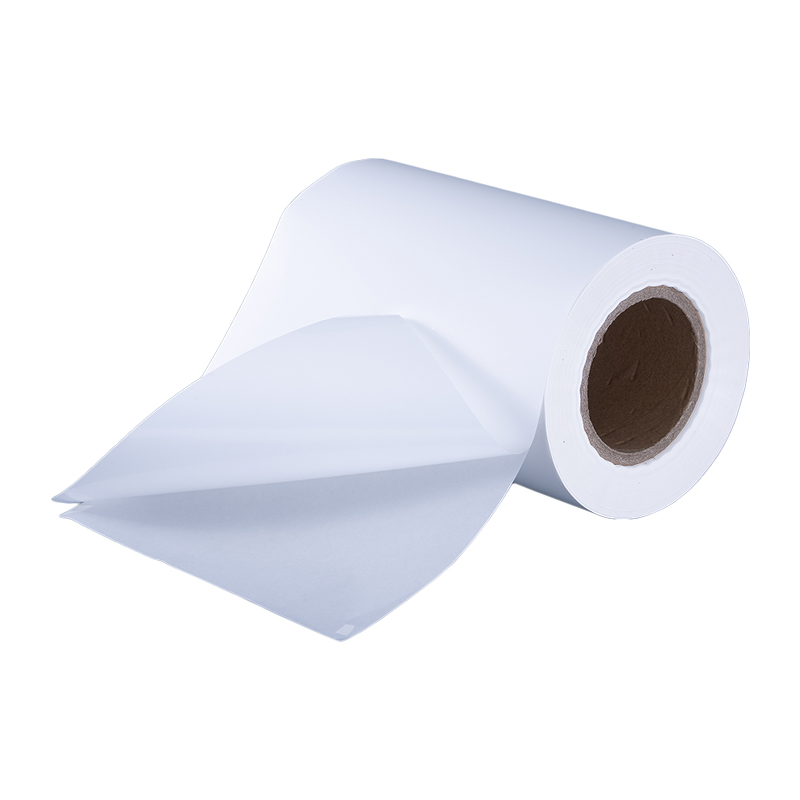
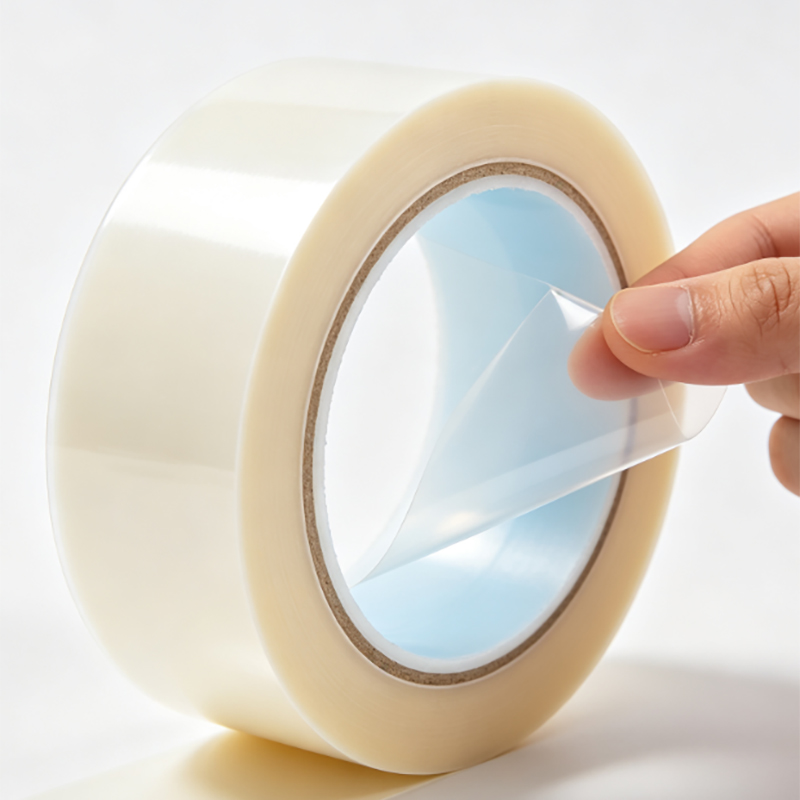
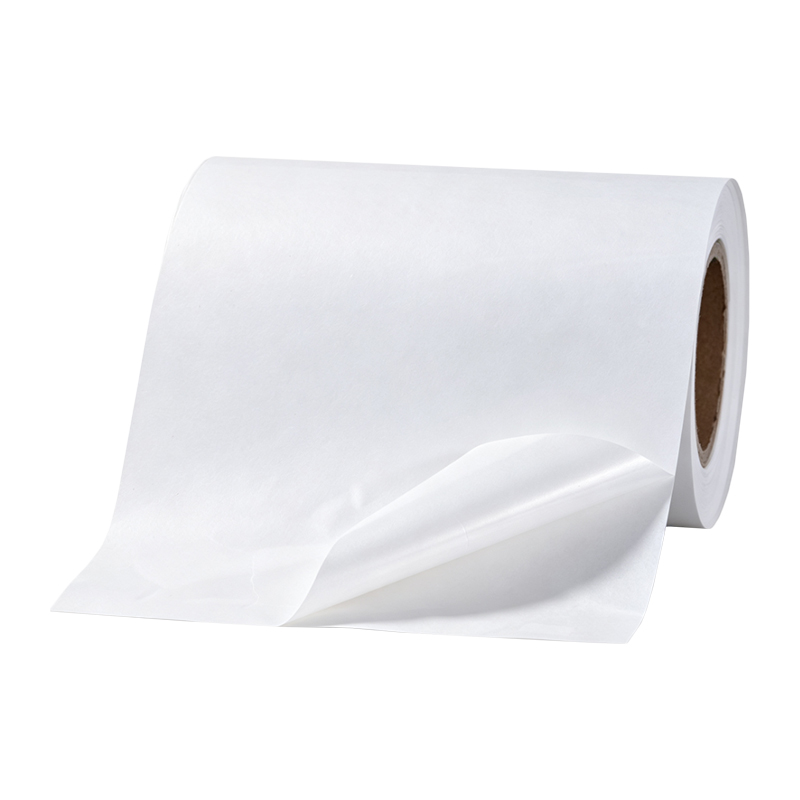
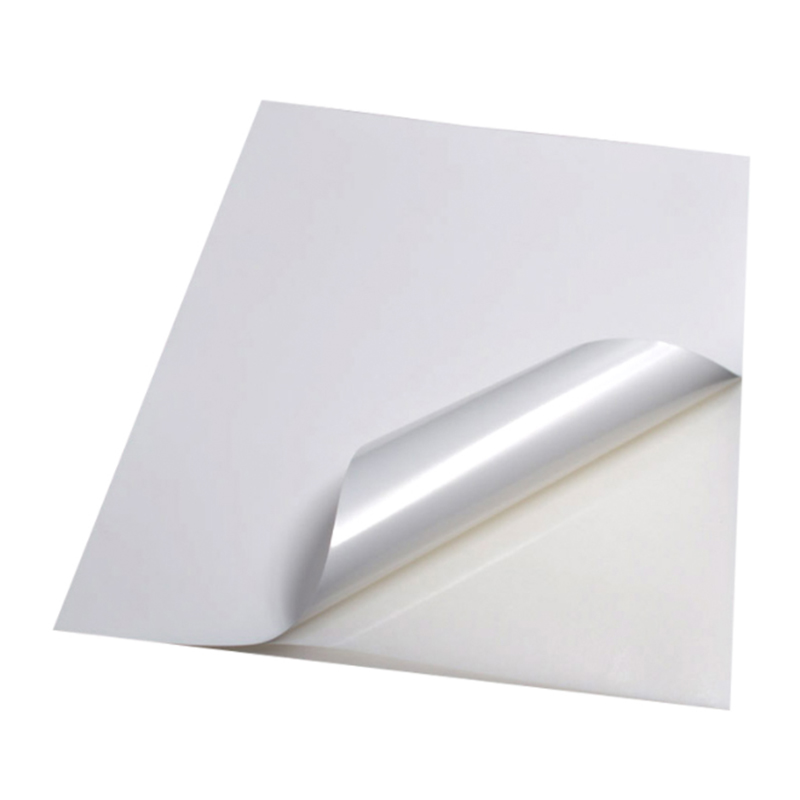
Label peeling, edge lifting, partial lifting and complete dropping off are persistent headaches for label converters, printing houses, and end product manufacturers across nearly every industry. Many businesses instinctively attribute label failure to poor printing quality, flawed artwork, or operator error during labeling. In reality, the vast majority of label fall off incidents stem from poorly matched self adhesive material components, including unsuitable face stock, incorrect adhesive formula, mismatched liner, or a material set that cannot cope with real world application and service environments. When labels detach from product surfaces, enterprises face tangible losses: rejected finished goods, increased production waste, delayed shipment schedules, negative end user feedback, and costly product recalls in severe cases. Carefully diagnosing the root causes behind label detachment enables buyers to select stable jumbo roll self adhesive raw materials, minimise waste, and guarantee long term label performance on finished goods. Below we break down eight frequent causes of label failure alongside targeted material level solutions.
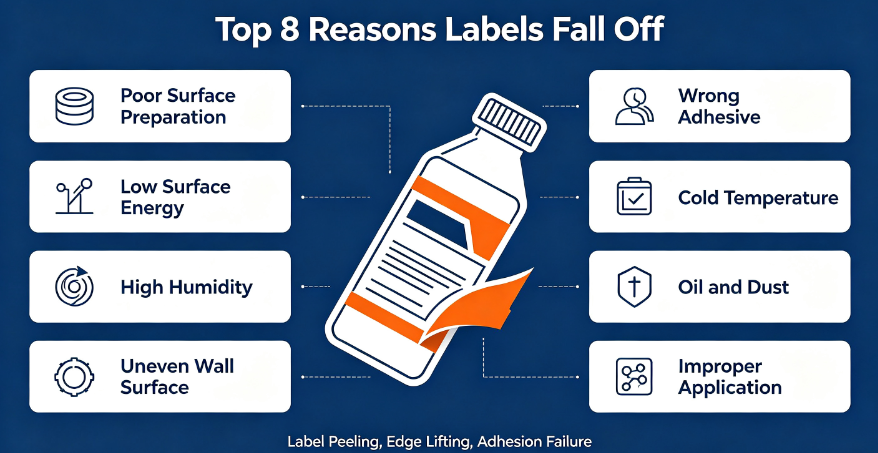
First, insufficient application temperature is an extremely common issue, especially in seasonal production cycles. Conventional water based acrylic adhesives rely on suitable ambient temperature to achieve adequate wet out on substrate surfaces. When the temperature drops below 10°C, standard water based acrylic glue loses its capacity to fully flow and bond tightly to surfaces. This issue frequently emerges in winter production workshops, unheated cold warehouses, cold chain processing lines, and frozen food packaging workshops. Labels may appear firmly attached right after labelling yet start peeling at the edges within hours or days. The practical solution is to switch to specially formulated low temperature resistant acrylic adhesive materials, which maintain good fluidity and bonding performance under low temperature operating conditions.
Second, contaminants including dust, oil residues, and surface moisture ruin adhesive bonding. Self adhesive adhesives can only deliver stable adhesion when they make full, direct contact with clean substrate surfaces. If the product surface carries fine dust, machine processing oil, grease, condensation moisture, or cleaning agent residue, the adhesive cannot completely wet the surface, creating invisible gaps between label and substrate. Even high quality standard adhesives will gradually lose grip and trigger label lifting. For such contaminated or hard to clean surfaces, high tack hot melt adhesive or rubber based adhesive series are recommended, as they offer initial tack and can tolerate minor surface contaminants.
Third, selecting improper adhesive for low surface energy substrates. PP and PE plastic bottles, widely used for daily chemical and food packaging, belong to low surface energy materials. Ordinary water based adhesives cannot form durable anchoring force on these smooth plastic surfaces. Although labels stick initially, bonding will deteriorate over storage time, resulting in slow label detachment. Solvent based acrylic adhesive is designed specifically for low energy plastic substrates to sustain long term adhesion.
Fourth, long term UV exposure and outdoor ageing. Labels used on outdoor equipment, logistics containers, and exterior consumer goods are continuously exposed to sunlight. Ordinary self adhesive materials suffer from photo oxidation: face stock turns yellow, becomes brittle, develops cracks, and adhesive performance degrades, eventually causing peeling. To resist outdoor UV damage, choose UV stabilised PET face stock paired with weather resistant solvent based adhesive.
Fifth, inappropriate die cutting parameters and unsuitable liner release force. Release force describes how easily the label face stock separates from the liner during labelling. If liner release force is excessively high or too low, labels may stretch, deform, or fail to separate cleanly during high speed automatic die cutting and labelling. Mis-fed, deformed labels cannot apply flatly onto products and tend to lift at edges. Industrial grade liners with custom tuned release force ranging from 5-15gf/in deliver stable performance for high speed processing equipment.
Sixth, continuous high temperature working environments. In automotive parts, electronics, and some industrial processing scenarios, labelled products endure sustained high temperature conditions. Standard adhesives soften, partially melt, and lose viscosity under heat, making labels prone to slipping and falling off. For high temperature scenarios, opt for PET materials coated with high temperature resistant rubber based adhesive.
Seventh, humid and damp climates. High humidity environments such as coastal regions, bathroom product workshops, and tropical warehouses affect adhesive initial tack. Moisture permeates the interface between label and substrate, triggering edge lifting and blistering. Waterproof synthetic paper face stock matched with high weather resistance adhesive can counteract high humidity caused label failure.
Eighth, unsuitable liner tension and liner material selection. Thin glassine liner is low cost yet prone to wrinkling and stretching when running on high speed automatic labelling machines. Wrinkled liners cause to uneven label application. PE coated kraft liner delivers good tensile strength and dimensional stability to support smooth machine operation.
In conclusion, around 90 percent of label fall off troubles can be resolved by optimising material structure matching instead of adjusting printing or labelling processes. Guanma provides professional material performance testing and custom tailored adhesive solutions for diverse application environments across industries. Free material samples are available for customers to run real condition validation tests before bulk ordering.
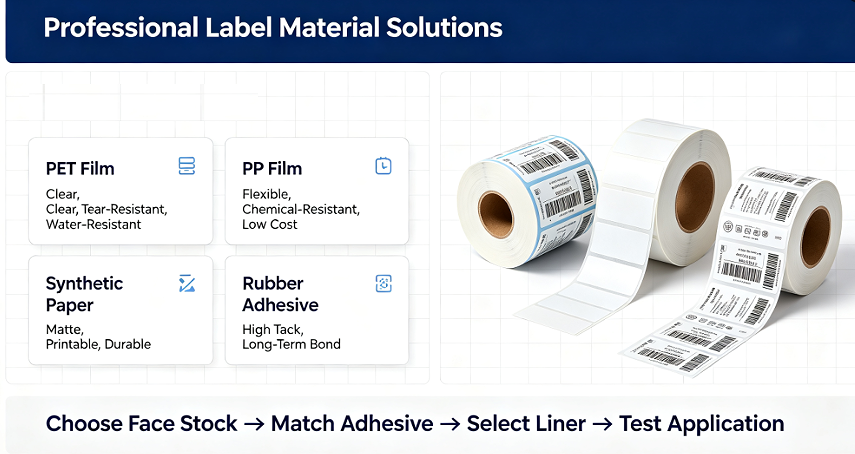
We have a professional R&D team and strong manufacturing capabilities to ensure product quality and delivery while doing a good job in product iteration and innovation.
Address : Building 2. No.111 Xincheng Road, Xitangqiao Street, Haiyan, Jiaxing, Zhejiang Province, China
Phone: +86-150 0573 0249
Tel: + 86-0573-8685 2732
Fax: + 86-0573-8685 2732
E-mail: [email protected]
Copyright© Zhejiang Guanma Packaging Co., Ltd.
 Privacy
OEM Self Adhesive Label Material Manufacturers Waterproof Labels Suppliers Custom Adhesive Label Material Factory