

 English
 русский
 Español
 عربى
عربى
Home / News / Industry News / Aluminized PET Film for Labels: Properties, Types, Printing Compatibility, and Sourcing Guide
Content
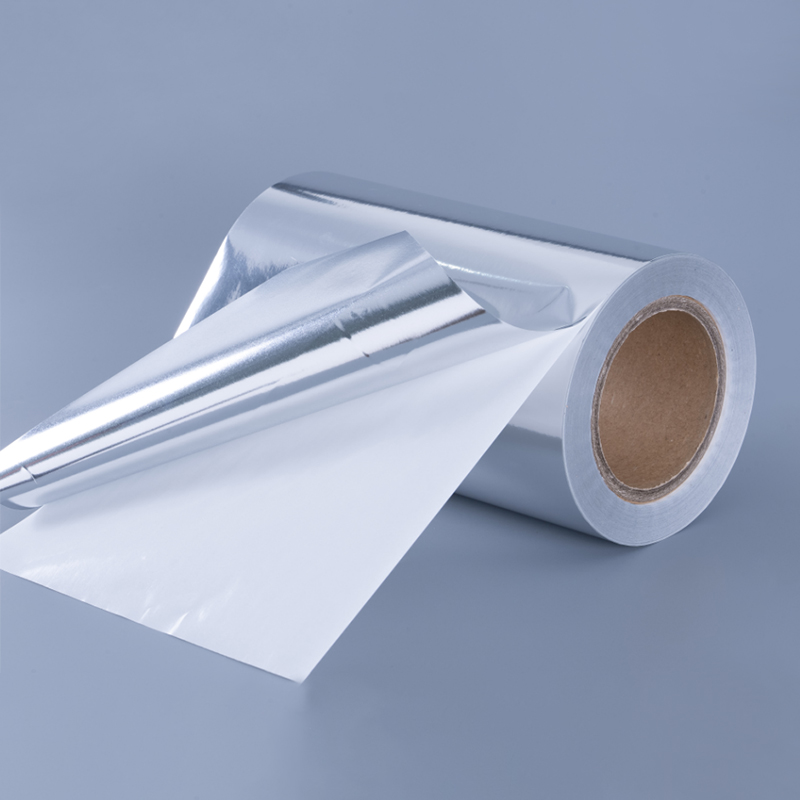
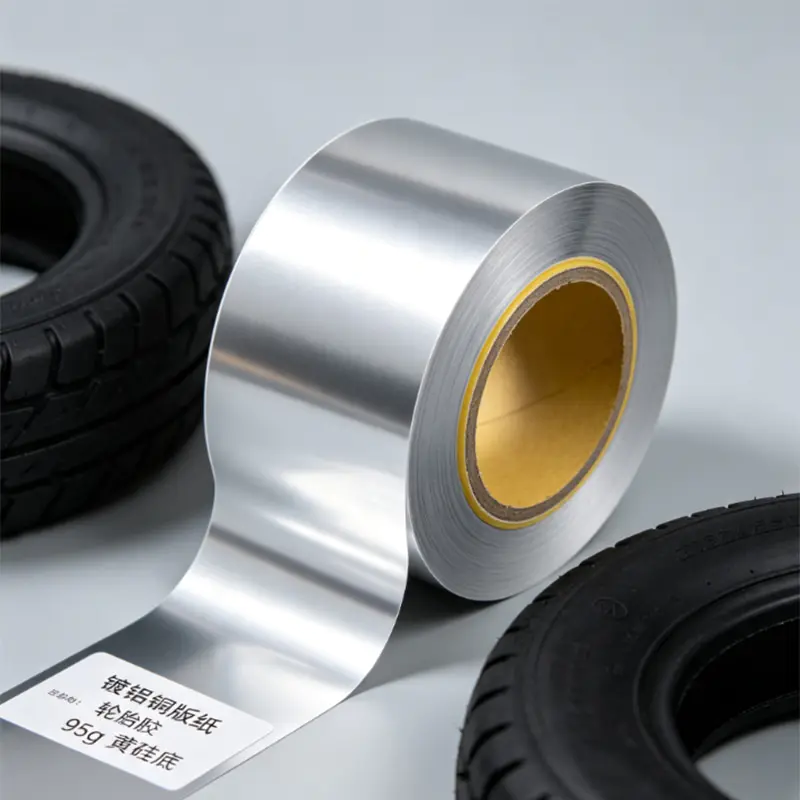
Aluminized PET film for labels — also referred to as metallized polyester film — is a composite material produced by vacuum-depositing an ultra-thin layer of pure aluminum onto a biaxially oriented polyethylene terephthalate (BOPET) substrate. The aluminum coating, typically ranging from 20 to 60 nanometers thick, bonds at a molecular level to the polyester base film, creating a mirror-like metallic surface that combines the mechanical strength of PET with the reflective and barrier properties of aluminum. The result is a high-performance label substrate that delivers premium visual appeal alongside functional protection.
The label industry favors metallized polyester film over alternatives like pure aluminum foil or plain plastic films because it offers the best balance of printability, dimensional stability, and cost efficiency. Unlike foil, aluminized PET film is tear-resistant and flexible enough to conform to curved container surfaces without cracking. Unlike plain PET, it provides a metallic finish that commands shelf presence in competitive retail environments — a critical advantage for brands in beverages, cosmetics, personal care, and food packaging.
Understanding how metallized PET label film is manufactured helps procurement teams and label converters assess quality differences between suppliers. The production process involves several precise stages carried out in a high-vacuum environment.
Before metallization, the base BOPET film undergoes corona discharge treatment to raise its surface energy, typically to 52–56 dynes/cm. This step creates microscopic surface oxidation that dramatically improves the adhesion of the aluminum layer. Without adequate corona treatment, the metal coating is prone to delamination, pinholes, and poor adhesion to subsequent ink or adhesive layers — all serious defects in a finished label product.
The pretreated PET film is fed through a vacuum chamber maintained at pressures below 10⁻⁴ mbar. Pure aluminum (99.99% purity) is heated in tungsten resistance boats or electron beam evaporators until it vaporizes. The aluminum vapor travels in straight lines through the vacuum and condenses uniformly onto the moving PET web, forming a continuous, pinhole-minimized metallic coating. The thickness of this layer is controlled by adjusting the web speed and evaporation rate, and is measured by optical density (OD) — a value of OD 2.0 to 3.5 being typical for label-grade metallized films.
After metallization, most label-grade aluminized PET films receive a lacquer topcoat or printable primer on the metal surface. This protective layer serves two purposes: it shields the aluminum from oxidation and chemical attack, and it provides a receptive surface for flexographic, gravure, digital, or offset printing inks. Some specialty films also receive an anti-static coating to facilitate smooth handling on high-speed label printing and converting equipment.
When evaluating aluminized polyester film for label applications, procurement managers and technical buyers should compare specifications across several performance dimensions. The following table outlines the standard property ranges for label-grade metallized PET film:
| Property | Typical Value / Range | Test Standard |
| Base Film Thickness | 12 µm, 19 µm, 23 µm, 36 µm | ASTM D374 |
| Optical Density (OD) | 2.0 – 3.5 | ASTM E1767 |
| Tensile Strength (MD/TD) | 180 / 220 MPa (min) | ASTM D882 |
| Elongation at Break | 100 – 150% | ASTM D882 |
| Oxygen Transmission Rate | <1.0 cc/m²/day | ASTM F1927 |
| Water Vapor Transmission Rate | <0.5 g/m²/day | ASTM F1249 |
| Surface Energy (Treated Side) | 38 – 44 dynes/cm | ASTM D2578 |
| Reflectivity (Gloss) | 85 – 95% (mirror grade) | ASTM D523 |
| Operating Temperature Range | -40°C to +150°C | Manufacturer spec |
Not all metallic label films are identical. Suppliers offer several distinct variants of aluminum-coated PET film, each engineered for specific label end-use requirements and printing processes.
Standard bright mirror aluminized PET film offers maximum reflectivity with an OD of 2.5 or higher. This variant is the most widely used in pressure-sensitive label stock for wine and spirits bottles, premium cosmetic jars, and high-end health supplement containers. Its mirror surface creates a chrome-like appearance that communicates luxury and quality at point of sale, making it a favored substrate for brands competing on shelf aesthetics.
Matte finish metallized polyester film is produced by applying a diffusing lacquer over the bright aluminum surface or by metallizing pre-textured PET base film. The result is a soft, non-glare metallic appearance increasingly popular in craft beverage labels, natural beauty product packaging, and artisanal food brands that want a metallic substrate with a more understated, sophisticated look. Matte metallized film also reduces unwanted light reflection during barcode scanning, an important practical advantage for retail environments.
Holographic metallized PET film embosses a diffraction grating pattern into the aluminum surface, producing rainbow-like light diffraction effects. This type is widely used for tamper-evident security labels, promotional stickers, and decorative packaging where visual impact and anti-counterfeiting functionality are both required. The holographic pattern is created through a precision embossing process before or after metallization, and is extremely difficult to replicate without specialized equipment.
For applications where some light transmission is desired alongside metallic aesthetics, very low OD metallized PET films (OD 0.8–1.5) are available. These semi-transparent variants are used in backlit display labels, window clings, and specialty packaging where the aluminum layer provides a barrier function or visual depth without completely blocking light. They are less common in standard pressure-sensitive labels but increasingly specified in custom packaging design projects.
Metallized polyester label film serves a remarkably diverse range of end markets. Its combination of barrier performance, visual impact, and printability makes it suitable for demanding applications across multiple sectors.
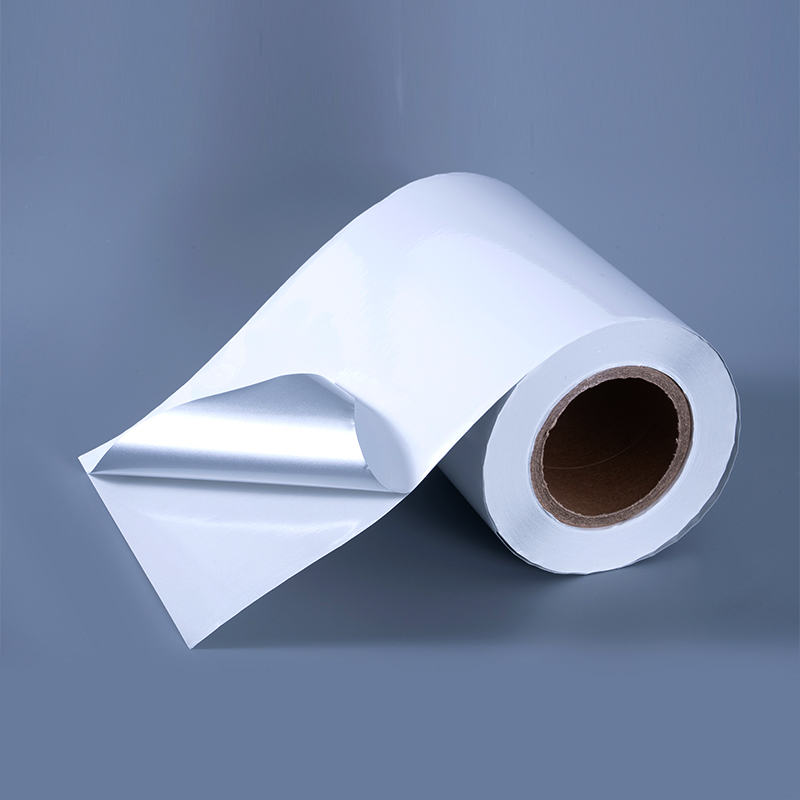
Successful printing on metallic polyester label film requires careful matching of printing process, ink chemistry, and surface treatment. Each major printing technology interacts differently with the metallized substrate.
Flexography is the most widely used process for printing on aluminized PET label stock, particularly in pressure-sensitive label converting. UV-curable flexo inks are preferred because they cure instantly under UV lamps without requiring solvent evaporation, which could stress the thin film substrate. Solvent-based flexo inks are also compatible but require careful tension control to prevent web distortion during drying. The metallic base film creates a built-in reflective background that enhances ink color vibrancy without the need for a silver underprint, reducing total ink cost.
Rotogravure printing on metallized PET delivers the highest image resolution and color consistency, making it the preferred process for long-run premium label production. Solvent-based gravure inks provide excellent adhesion to properly corona-treated metallized surfaces and withstand aggressive end-use environments. Gravure is commonly specified for wine labels, cosmetic tubes, and confectionery wrappers where photographic image quality and metallic brilliance must be maintained across millions of impressions.
Digital printing on aluminized PET film has grown significantly with the adoption of UV inkjet and HP Indigo electrophotographic presses in the label industry. Digital-compatible metallized PET requires a specifically formulated primer or topcoat to achieve adequate ink adhesion and resistance to scratch and rub. Without this preparation, digital inks tend to bead or flake on the smooth metallic surface. Several film suppliers now offer digitally optimized metallized PET grades designed specifically for short-run premium label production on digital presses.
Label buyers frequently compare aluminized PET film against traditional aluminum foil as substrates for metallic label applications. While both deliver metallic aesthetics, their performance profiles differ significantly across practical criteria.
| Criteria | Aluminized PET Film | Aluminum Foil Label |
| Tear Resistance | Excellent | Poor (tears easily) |
| Conformability to Curves | Good | Excellent (dead-fold) |
| Print Sharpness | Excellent | Good |
| Moisture Barrier | Good (<0.5 g/m²/day) | Excellent (<0.01 g/m²/day) |
| Cost | Lower | Higher |
| Converting Speed | High | Moderate (risk of cracking) |
| Recyclability | Limited (mixed material) | Recyclable as aluminum |
| Metallic Appearance | High reflectivity | Authentic metallic look |
For most label converters, aluminized PET film offers a compelling combination of processing ease, print quality, and cost efficiency that makes it the default choice for metallic label production. Aluminum foil retains advantages primarily in dead-fold applications (like wine capsules) and in packaging contexts where the highest possible moisture barrier is required.
The adhesive system used with aluminized PET label film must be selected carefully to achieve adequate bond strength to the intended substrate surface without compromising the film's metallic appearance or causing delamination between the aluminum layer and the PET base.
Environmental concerns around metallized films have become an increasingly prominent topic as brand owners face pressure to improve the recyclability of their packaging. Aluminized PET film presents specific sustainability challenges because the aluminum coating — while extremely thin — contaminates the PET recycling stream and prevents the base film from being recycled as clean PET through standard material recovery facilities.
Several developments are addressing this limitation. Wash-off metallized label constructions, where the aluminum layer separates from the PET during the hot caustic wash stage of PET bottle recycling, are now available from specialist film suppliers. These designs allow the PET base film to re-enter the recycling stream while the aluminum is filtered out. Additionally, some brands are transitioning to aluminum-effect inks or cold foil transfer processes that can achieve a similar metallic aesthetic without the barrier properties of true vacuum metallization, enabling full recyclability of the label substrate.
For applications where true barrier performance is required — such as lidding films or flexible packaging — bio-based PET substrates combined with thin-layer metallization represent a longer-term path toward reduced carbon footprint without sacrificing the functional properties that make aluminized PET film valuable to the label industry.
Label converters and packaging buyers sourcing metallized polyester film for the first time — or evaluating alternative suppliers — should approach the specification process systematically to avoid costly quality issues in production.
We have a professional R&D team and strong manufacturing capabilities to ensure product quality and delivery while doing a good job in product iteration and innovation.
Address : Building 2. No.111 Xincheng Road, Xitangqiao Street, Haiyan, Jiaxing, Zhejiang Province, China
Phone: +86-150 0573 0249
Tel: + 86-0573-8685 2732
Fax: + 86-0573-8685 2732
E-mail: [email protected]
Copyright© Zhejiang Guanma Packaging Co., Ltd.
 Privacy
OEM Self Adhesive Label Material Manufacturers Waterproof Labels Suppliers Custom Adhesive Label Material Factory